Advanced Brain Tumor Surgery Restores Quality of Life for Complex Case at Greater Noida Hospital
A 37-year-old patient has made a complete recovery following successful surgical treatment of a rare and intricate brain tumor at Yatharth Super Speciality Hospital in Greater Noida.
The patient's medical journey began with a troubling constellation of symptoms. Over nearly twelve months, he experienced recurring bouts of dizziness. His condition deteriorated further with progressive memory loss over the preceding half-year, along with speech difficulties. Most alarmingly, he recently began experiencing seizures characterized by tongue biting and temporary loss of consciousness. As these manifestations intensified and began disrupting his daily functioning, he sought comprehensive neurological assessment at the hospital.
Diagnostic investigations identified a Left Medial Sphenoid Wing Meningioma—a rare tumor originating from the skull base. The location proved particularly challenging, as the growth had developed in close proximity to vital blood vessels and delicate neural structures. To develop the most appropriate surgical strategy, the neurosciences team employed sophisticated vascular mapping utilizing Cerebral Digital Subtraction Angiography (DSA) and other cutting-edge imaging modalities.
The imaging revealed that the tumor was highly vascular in nature, drawing blood supply from multiple major cerebral arteries. This vascularity, combined with the presence of numerous high-risk vascular formations in the vicinity, created substantial surgical complexity. The neurointerventional specialists determined that pre-operative tumor embolization—a procedure sometimes used to reduce blood flow to tumors—would pose unacceptable risks in this particular case.
Prioritizing patient safety, the team proceeded directly to advanced neurosurgical intervention. The surgical procedure resulted in complete and safe removal of the tumor.
The patient's recovery has been remarkable. His dizziness has fully resolved, his memory and cognitive abilities have substantially improved, and he has experienced no recurrence of seizures. He has successfully returned to his regular personal and professional responsibilities.
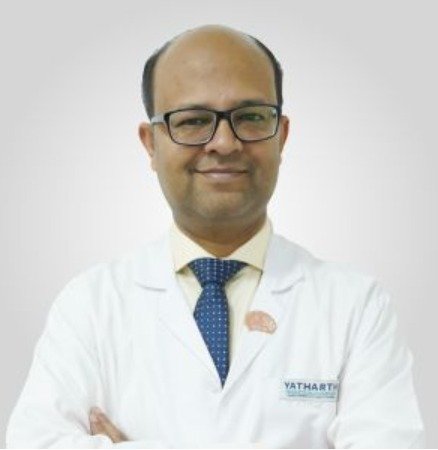
Dr. Sumit Goyal, Director and Head of the Neurosurgery Department and Group Director of Neurointervention at Yatharth Hospital, emphasized the importance of recognizing warning signs. "A brain tumor diagnosis need not be a cause for despair," he noted. "Symptoms such as persistent headaches, dizziness, memory difficulties, seizures, balance disturbances, or visual changes are frequently attributed to stress or natural aging. Nevertheless, prompt evaluation and diagnosis can prove life-saving."
The hospital has successfully managed multiple other challenging cases, including a 40-year-old woman with Olfactory Groove Meningioma who had experienced loss of smell, and a 76-year-old patient presenting with hydrocephalus and a pituitary tumor, who underwent minimally invasive transnasal surgery. According to Dr. Goyal, these outcomes illustrate how the combination of sophisticated technology, timely medical intervention, and coordinated specialist teams can address even the most formidable brain tumor cases. "Recognition of warning signs, prompt medical consultation, and sustained optimism remain essential," he concluded, "as contemporary medical advances continue to enhance outcomes for patients with brain tumors."
Compare options