Telangana's Welfare Framework Positioned as Model for National Emulation
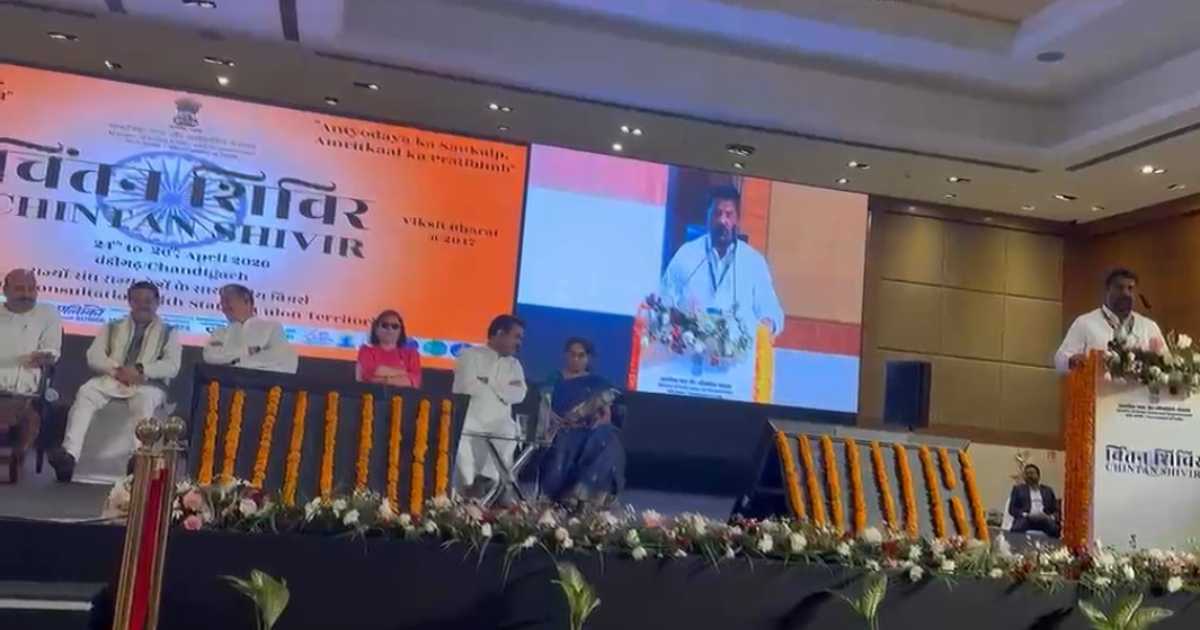
Telangana's approach to welfare delivery has been positioned as a benchmark that other states should consider adopting, according to Welfare Minister Adluri Laxman Kumar. The Minister made these remarks during the Chintan Shivir–2026, a gathering convened by the Union Ministry of Social Justice and Empowerment in Chandigarh on Sunday, which brought together state ministers and senior administrators to deliberate on social justice, welfare service delivery, and support for vulnerable populations.
The state's welfare framework operates on principles of "equity, empowerment, and dignity" under Chief Minister A. Revanth Reddy's administration, Laxman Kumar explained. He pointed to the renaming of the social welfare department as the SC development department as evidence of the government's intensified commitment to advancing Dalit communities.
Education forms the cornerstone of Telangana's welfare initiatives. The state has allocated ₹574.74 crore for post-matric scholarships, reaching 3.39 lakh students, while ₹66.31 crore supports pre-matric scholarships for 73,666 students. The Dr B.R. Ambedkar Overseas Education Fund has received ₹103.49 crore, enabling 564 students to pursue advanced studies abroad. A further ₹24.53 crore funds the TG SC Study Circles programme, which assists 2,426 aspirants in preparing for competitive examinations, including the Civil Services.
Residential facilities have received significant investment, with ₹628.42 crore directed toward SC hostels that provide accommodation, meals, and related support to 2.26 lakh students from disadvantaged backgrounds, thereby expanding educational access across underrepresented communities.
Beyond education, the state's social welfare schemes demonstrate broad reach. The Kalyana Lakshmi scheme has distributed ₹476.15 crore to 47,539 beneficiaries, while ₹43.06 crore in incentives has been provided to 1,723 inter-caste couples to foster social cohesion and integration.
The welfare model extends its focus across multiple marginalized populations, including Scheduled Castes, Scheduled Tribes, Backward Classes, persons with disabilities, senior citizens, and transgender persons, reflecting a commitment to comprehensive social support across diverse groups.
Compare options