Telangana faces dangerous heatwave with temperatures expected to reach 47°C
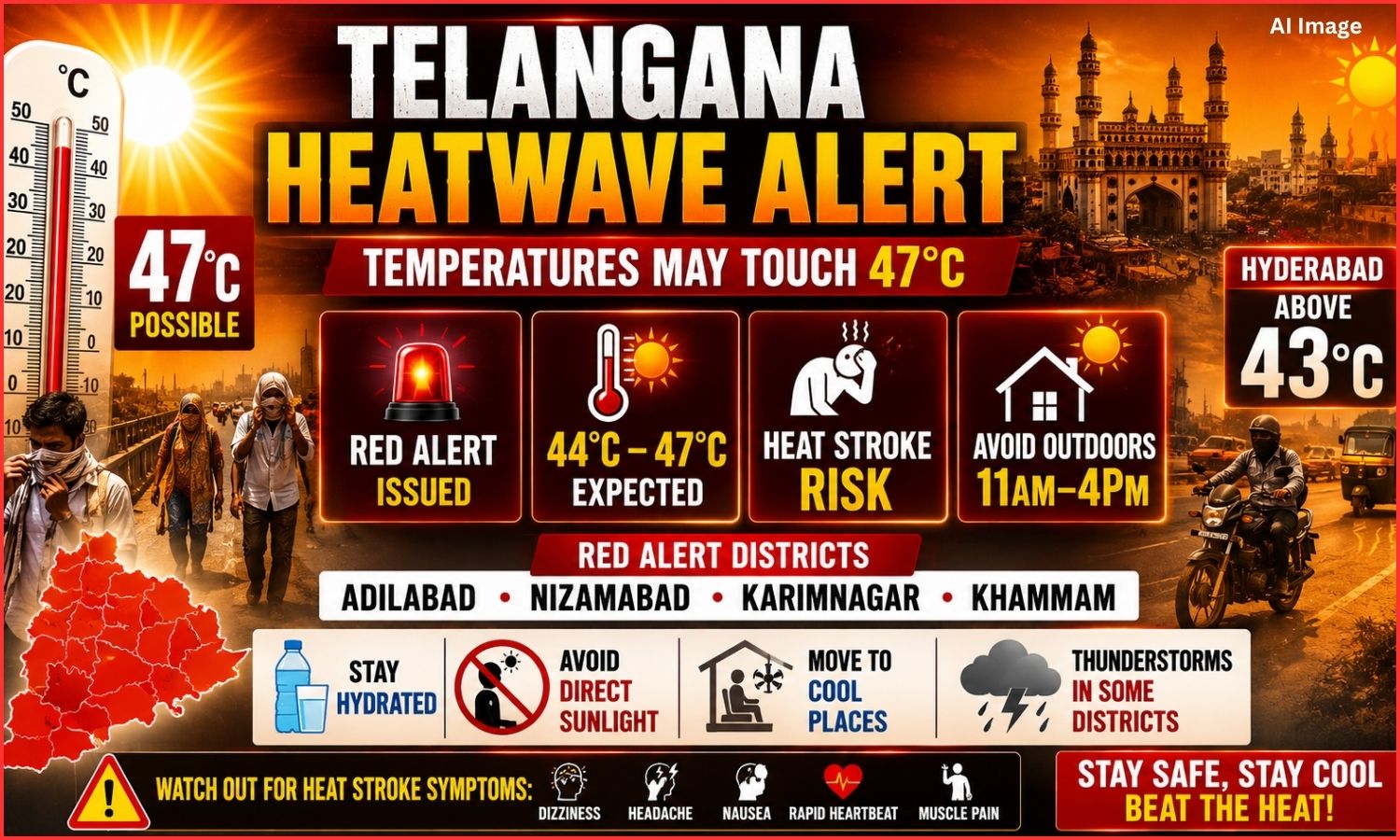
Telangana is grappling with an intensifying heatwave as temperatures surge across the state, with forecasts indicating the mercury could climb to 47°C in several regions.
Meteorological experts have warned that severe heat conditions are expected to blanket much of Telangana on Thursday. In response, authorities have issued red alert warnings for eight districts: Adilabad, Komaram Bheem Asifabad, Nirmal, Jagtial, Karimnagar, Peddapalli, Rajanna Sircilla, and Nizamabad.
An additional ten districts have also been placed under alert status: Jayashankar Bhupalpally, Hanamkonda, Mulugu, Warangal, Jangaon, Bhadradri Kothagudem, Mahabubabad, Nalgonda, Suryapet, and Khammam. In these areas, temperatures are projected to hover between 44°C and 47°C. The state capital, Hyderabad, is expected to experience temperatures exceeding 43°C.
Weather specialists have cautioned that the period between 11 am and 4 pm poses particular danger, with outdoor exposure during these hours increasing the risk of heat stroke. Additionally, meteorologists predict isolated thunderstorms may develop in Vikarabad, Rangareddy, Sangareddy, Nagarkurnool, Wanaparthy, Gadwal, and Mahabubnagar districts.
Medical professionals have stressed that sustained exposure to such extreme temperatures can precipitate severe health emergencies within a short timeframe. They have urged residents to remain vigilant for warning signs including dizziness, intense headaches, vomiting, nausea, accelerated heart rate, muscle aches, and profuse perspiration.
Physicians cautioned that serious heat stroke can compromise neurological function, leading to confusion, slurred speech, and disorientation. Without prompt medical intervention, the condition can cause irreversible damage to critical organs such as the kidneys and heart.
Certain populations face heightened vulnerability during extreme heat episodes. Children, senior citizens, and workers engaged in outdoor occupations are at elevated risk. Those with pre-existing cardiac conditions and diabetes are similarly susceptible to heat-related complications.
Health authorities have provided guidance for managing heat stroke cases. Immediate steps include relocating victims to cooler environments, loosening restrictive clothing, applying wet cloths to the body, and positioning ice packs around the neck and armpits. Medical professionals have specifically advised against self-treatment with paracetamol during heat stroke incidents and recommended seeking professional medical care without delay.
Compare options