Supreme Court halts tree-cutting operations near KBR National Park
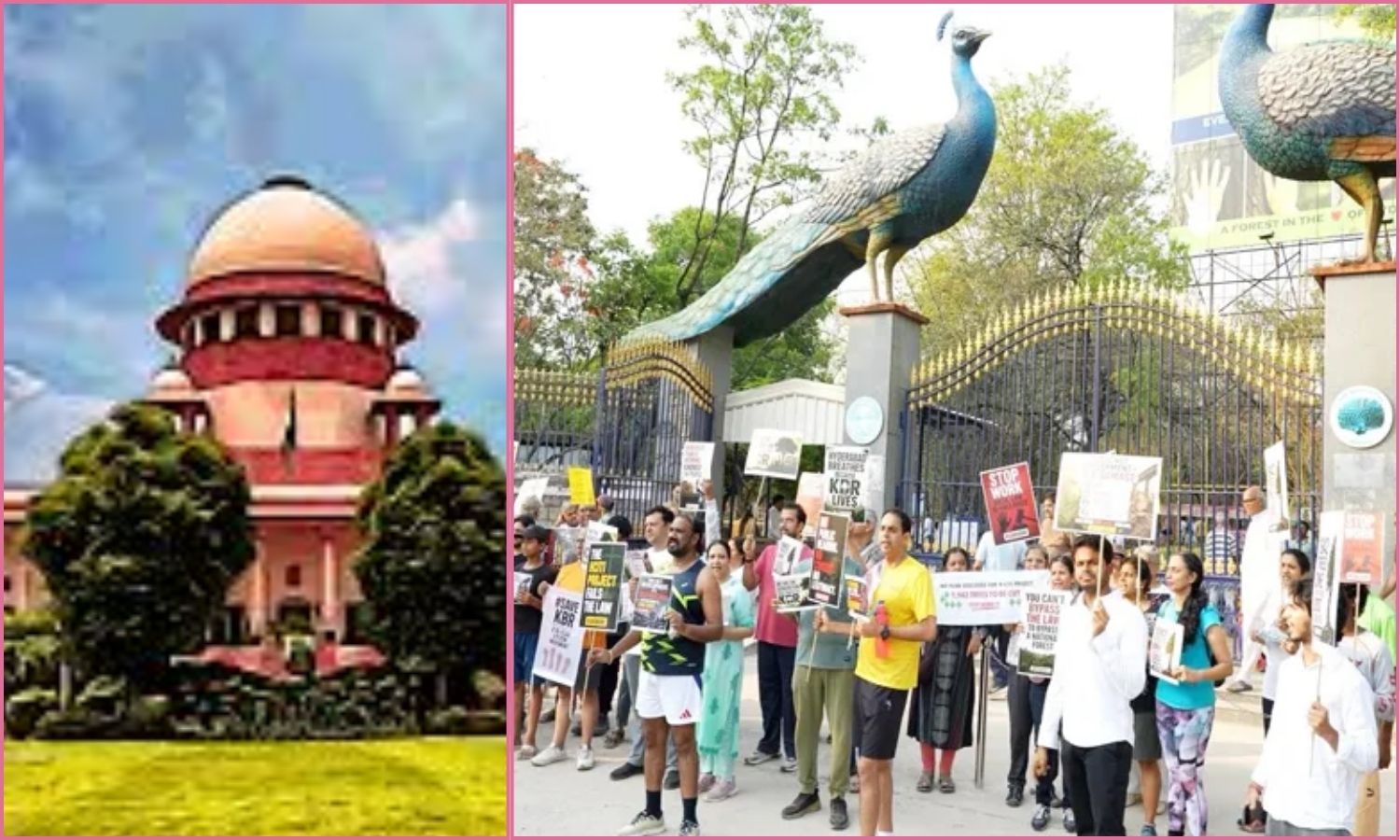
Hyderabad's KBR National Park has received temporary legal protection as the Supreme Court intervened to stop ongoing tree-cutting activities in the surrounding area. The intervention came during hearings on Monday concerning road expansion initiatives under the Strategic Road Development Programme (SRDP).
A two-judge bench comprising Justice B.V. Nagarathna and Justice Ujjal Bhuyan issued the interim order and directed notices to both the central government and the Telangana administration. The court's directive specifically prohibits the felling of trees within the 25 to 35 metre Eco-Sensitive Zone encircling the park pending further judicial determination.
Environmental activist Kajal Maheshwari initiated the legal challenge after the Telangana High Court declined to grant emergency relief. The Supreme Court's intervention is anticipated to create a temporary pause in SRDP construction activities in the vicinity of the park.
Questions over buffer zone modifications
The petition raises significant concerns about how authorities have managed the park's protective boundaries. KBR National Park, formally designated under Section 35 of the Wildlife Protection Act, 1972, functions as a critical urban forest ecosystem within the city. Initially, environmental authorities had proposed establishing a protective buffer zone extending 25 to 35 metres from the park's perimeter.
The government subsequently narrowed this protective corridor to between 3 metres and 29.8 metres—a reduction the petitioner contends was motivated by infrastructure development needs rather than environmental considerations. This compressed buffer zone, according to the petition, diminishes the park's ability to withstand pollution and noise pollution from external sources.
The challenge directly contests the Union Environment Ministry's notification dated October 27, 2020, which formalized the reduced buffer dimensions. The petition asserts that environmental and scientific assessments were not conducted before implementing this significant change, and suggests the modification was primarily designed to reduce land acquisition expenses for road development projects.
Public concerns dismissed
According to the legal filing, more than 19,000 individuals filed formal objections to the buffer zone reduction. The petition contends that administrative authorities disregarded these public submissions. Furthermore, the petitioner alleges that officials misrepresented the procedural process, claiming a public consultation had occurred when, according to the petition, no such hearing took place before the notification was issued.
The petitioner had previously sought judicial intervention through the Telangana High Court regarding alleged regulatory violations affecting the park. That court postponed proceedings to May 5 without offering provisional relief measures.
The Supreme Court bench emphasized that environmental conservation demands immediate action. It accordingly implemented an immediate prohibition on tree-felling activities and set the subsequent hearing for July 27.
Compare options