Sudha Reddy Showcases South Indian Artistry at Met Gala 2026
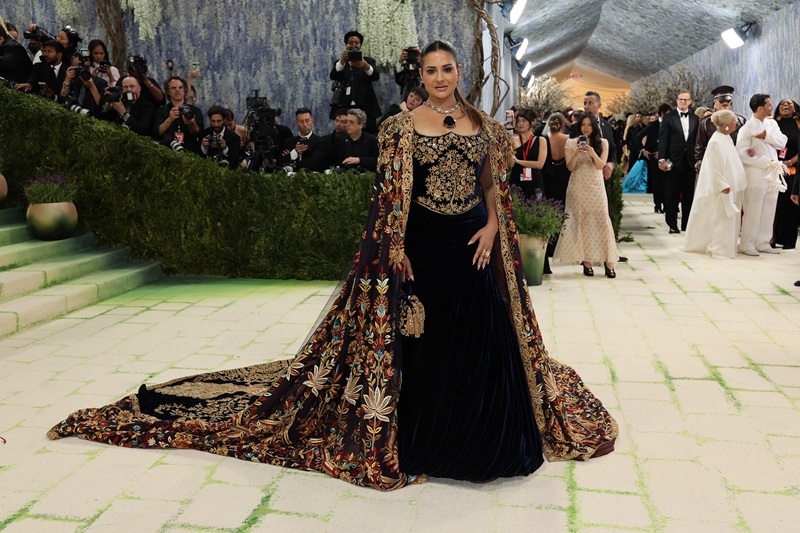
NEW YORK — Sudha Reddy made a striking appearance at the 2026 Met Gala, gracing the red carpet in a bespoke ensemble that merged traditional Indian craftsmanship with high fashion. The billionaire philanthropist and cultural ambassador worked alongside India's renowned couturier Manish Malhotra and celebrity stylist Mariel Haenn to create a piece titled "The Tree of Life," which drew inspiration from Machilipatnam's Kalamkari tradition.
Kalamkari, an art form spanning three millennia, has long been characterized by intricate hand-painted designs using natural dyes, depicting mythological narratives, botanical elements, and cosmic themes. The Tree of Life—its most iconic motif—represents harmony, expansion, and the interconnection of existence, becoming the thematic centerpiece of Reddy's gown.
The creation embodied this year's "Costume Art" theme by transcending conventional fashion boundaries. Over 3,459 hours of meticulous labor by more than 90 artisans brought the vision to life, incorporating zardozi, marodi, resham, and metalwork—traditional Indian hand-embroidery techniques reimagined through contemporary couture sensibilities.
Reddy's hometown of Telangana inspired the design's symbolic vocabulary. Regional flora and fauna—the Palapitta (Indian Roller), Jammi Chettu (Prosopis Cineraria), and Tangedu (Tanner's Cassia)—interwove with celestial references to Kalpavriksha (the mythological wish-fulfilling tree), Surya (the Sun deity), and Chandra (the Moon deity). These elements, rooted in Telangana's seasonal celebrations and cultural practices, created a wearable heritage narrative.
The silhouette featured a sculpted, corseted form in deep royal blue, anchored by Malhotra's signature swirl construction. Antique gold zari embroidery cascaded across the garment, while the Tree of Life unfolded in elaborate zardozi work across velvet, silk, and tulle. Delicate marodi detailing rendered the Palapitta along the bodice, while peacock embroidery adorned a seven-meter train, amplifying the design's dramatic presence. A translucent tulle cape, hand-embroidered with resham and accented with antique gold zari, depicted Hyderabad's botanical and zoological heritage. A hand-crafted metal sculpture in brass, copper, and silver crowned the upper back, featuring the Kalpavriksha surrounded by regional motifs.
The sapphire-toned palette extended through Reddy's jewelry, drawn from her personal collection and appraised at $15 million. A Victorian-era necklace showcased triangular and pear-shaped rose-cut diamonds arranged in floral formations, centered on the 550-carat "Queen of Merelani" deep violet-blue tanzanite from Tanzania's Merelani Hills. The jewelry suite included a 23-carat yellow diamond ring and a 30-carat rose-cut polki diamond ring from Rajasthan. A Dolce & Gabbana minaudière, encrusted with brilliant crystals in baroque style, completed the look, alongside a custom Manish Malhotra clutch featuring vintage zardozi embroidery and gold tassels.
Haenn's styling approach emphasized refined restraint—soft contouring, diffused smoky cat-eyes, a sleek low ponytail, and gold-chrome French tip nails balanced the ensemble's elaborate embellishment.
Through this appearance, Reddy positioned regional Indian artistry on the international stage, reaffirming her dedication to cultural representation through fashion. Since her inaugural Met Gala appearance in 2021 and her return in 2024, the philanthropist has established a distinctive presence, championing Indian couture and traditional craftsmanship globally.
Compare options