S&P Downgrades India's GDP Growth Outlook for 2026-27 Amid Global Tensions
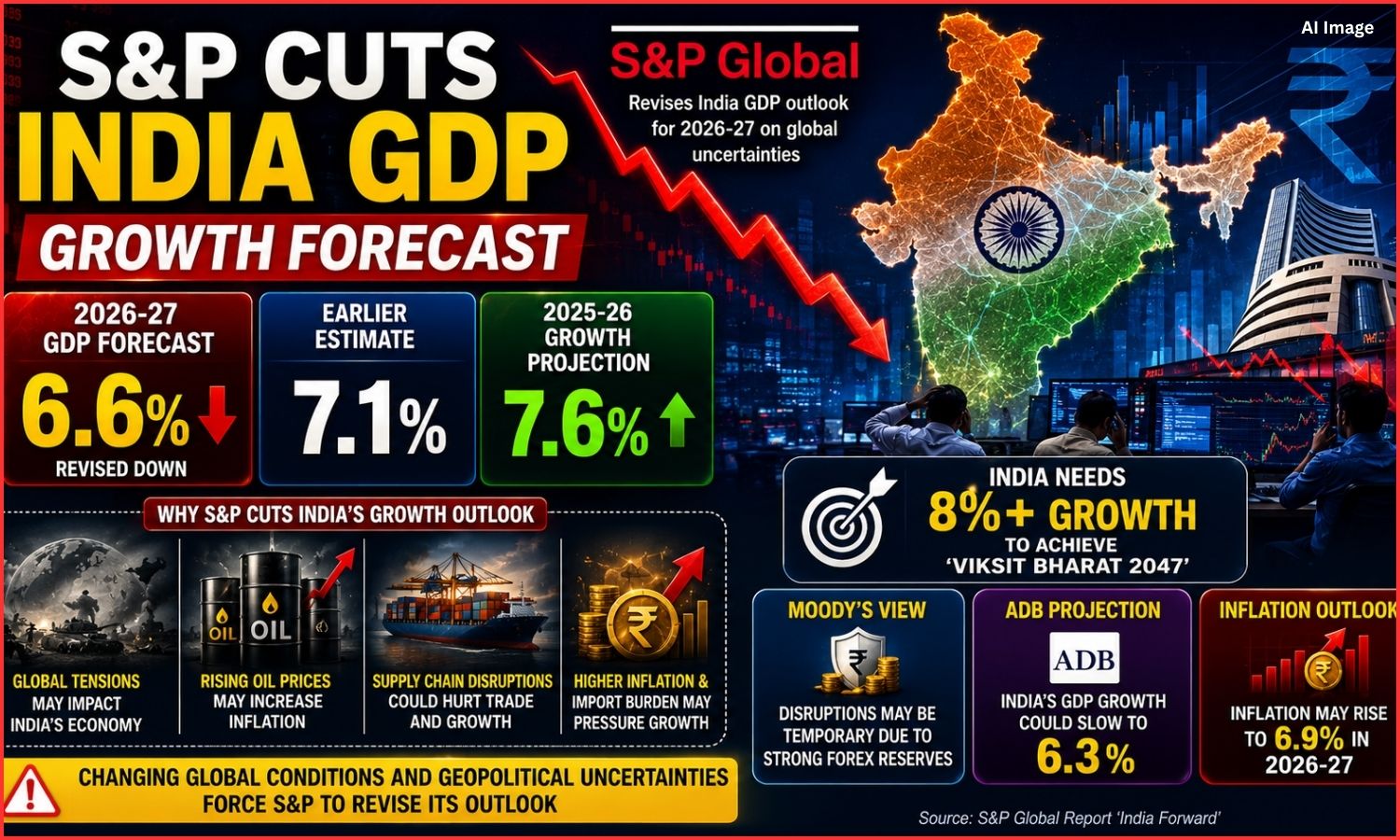
The international ratings firm S&P Global has trimmed its economic growth projection for India, citing mounting geopolitical risks and international instability as drivers of slower expansion ahead.
In its revised assessment, S&P now forecasts India's GDP will expand by 6.6 percent during the 2026-27 financial year, down from its previous estimate of 7.1 percent. For the ongoing 2025-26 fiscal year, the agency maintains its projection of 7.6 percent growth.
The downward revision reflects changing global dynamics and mounting uncertainties on the international stage, the agency explained in its report.
Impact of West Asian Tensions on Growth
Escalating tensions in West Asia pose a tangible risk to India's economic prospects, S&P cautioned. Such instability could disrupt the flow of goods across global markets and drive up crude oil prices, the agency warned. Higher oil costs would likely translate into increased inflationary pressures within India while simultaneously straining the nation's import expenditure. These combined effects could weigh on the current account deficit and ultimately constrain economic growth, S&P noted.
Achieving Long-Term Development Goals
For India to reach its 'Viksit Bharat 2047' development target, the nation must sustain annual GDP growth exceeding 8 percent, S&P emphasized. To support this trajectory, the report—titled "India Forward"—called for urgent policy reforms focused on strengthening energy security, bolstering food security, and advancing energy storage infrastructure.
Other Forecasters Weigh In
The outlook from S&P aligns with concerns raised by other major economic institutions. Moody's has suggested that while economic disruptions could emerge, India's substantial foreign exchange reserves may cushion the impact and prevent prolonged damage. The Asian Development Bank presented a more pessimistic scenario, projecting that Middle Eastern tensions could slow India's growth to 6.3 percent.
Inflation is expected to climb to 6.9 percent by 2026-27, representing a rise of approximately 2.4 percentage points from current levels, according to available estimates.
Compare options