Samsung's Solve for Tomorrow Initiative Nurtures Student Innovators in Himachal Pradesh
SOLAN, Himachal Pradesh – In the mountainous regions of Himachal Pradesh, pressing local issues often go unnoticed by mainstream media. Whether it is the scarcity of quality healthcare, the absence of adaptive devices for individuals with disabilities, gaps in educational infrastructure, or obstacles posed by challenging geography, these everyday problems are now inspiring a wave of young problem-solvers.
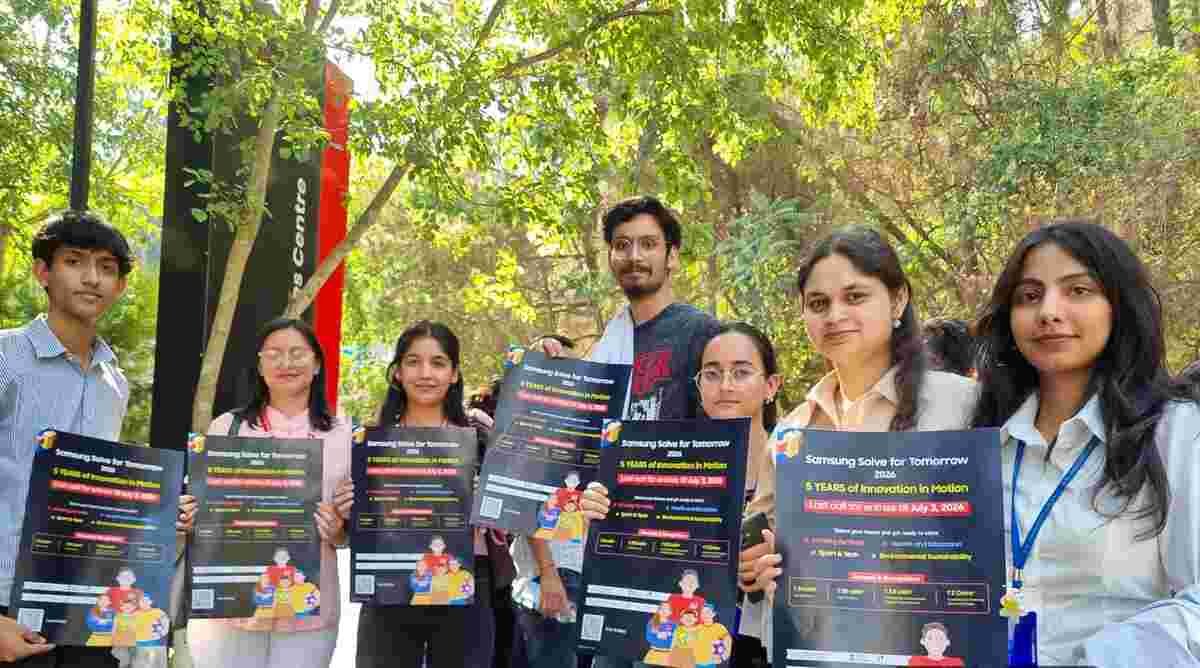
More than 300 students from across Himachal Pradesh convened at Shoolini University for a Design Thinking Workshop organised under Samsung Solve for Tomorrow, where they explored how genuine innovation stems from deeply understanding what communities actually need, rather than pursuing technology as an end in itself.
Samsung Solve for Tomorrow 2026 represents the technology giant's principal initiative to engage youth between 14 and 22 years old in creating solutions grounded in technology. The programme focuses on areas including artificial intelligence, healthcare and education, ecological sustainability, and the intersection of sports and technology.
The workshop introduced participants to Samsung's user-focused Design Thinking methodology, which guides innovators through several stages: connecting with end-users, uncovering underlying issues, brainstorming possibilities, constructing prototypes and validating their concepts.
Participants responded enthusiastically to this framework, recognizing pathways to tackle issues within their own localities. Randesh Gupta, pursuing his third year of studies, reflected on how the session shifted his perspective on accessibility barriers facing people with disabilities. "The workshop taught me that many problems stay hidden until we actually talk to those experiencing them. It showed me how technology could create meaningful solutions that truly enhance people's lives," he shared.
Mahesh, a second-year BCA student, highlighted how the structured methodology transformed abstract thinking into actionable innovation. "Samsung is equipping students with the tools to spot genuine issues and craft focused solutions. This framework provides much clearer guidance for developing innovations," he explained.
For Mahek, a Class XII pupil from Solan, the experience underscored a fundamental principle. "I realized that transformative solutions do not necessarily require groundbreaking concepts. Often, addressing a modest issue affecting your immediate surroundings can be the starting point," she noted.
The workshop exemplifies Samsung's commitment to establishing innovation networks at the community level by bringing Design Thinking and entrepreneurial education to young people throughout India. The 2026 programme involves conducting sessions across 100 cities nationally, enabling emerging innovators to identify regional problems and develop responses with broader impact potential.
The initiative has already reached thousands of students nationwide and is establishing a talent pipeline of future entrepreneurs and social innovators prepared to tackle problems in their own regions.
The programme's final phase will see the four highest-performing teams awarded incubation grants totalling INR 2 crore at FITT, IIT Delhi. These teams will also receive mentoring, educational support and resources for prototype development to transform their concepts into viable solutions.
As innovation expands beyond India's metropolitan areas, initiatives like Samsung Solve for Tomorrow demonstrate that transformative solutions may originate not in established innovation hubs, but among students addressing the real challenges they face daily.
Interested participants can submit applications for Samsung Solve for Tomorrow 2026 through July 3, 2026.
Compare options