Schaeffler India Establishes Advanced Computing Research Facility at IISC Bengaluru
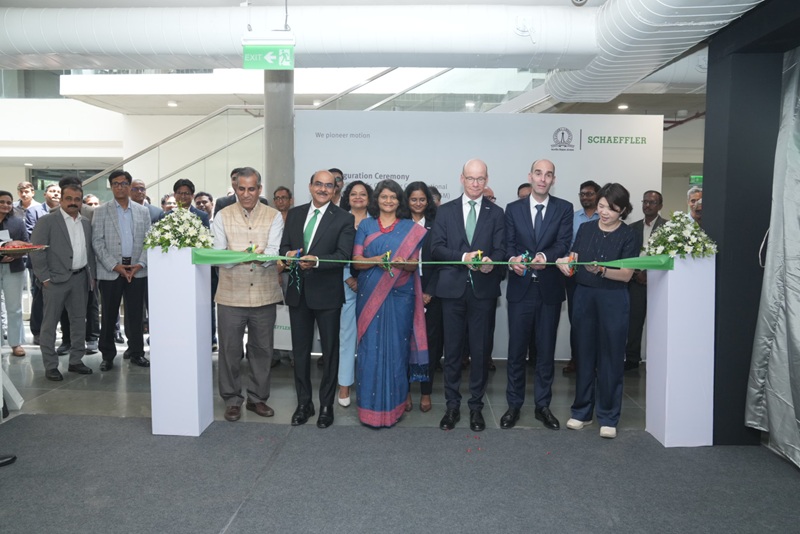
Schaeffler India, a motion technology enterprise, has unveiled a state-of-the-art computational research infrastructure at the Foundation for Science Innovation and Development (FSID) in Bengaluru. The facility represents a strategic partnership with the Indian Institute of Science and aims to bolster research capabilities through high-performance computing infrastructure capable of executing large-scale simulations, data-intensive modelling, and sophisticated analytics.
The new facility will concentrate on domains including materials science, energy systems, and sustainable mobility. The infrastructure enhancements are designed to facilitate stronger collaboration between academic and industrial partners, elevate research standards, and ensure greater practical application of findings in real-world industrial contexts.
The computational centre incorporates dedicated laboratory space, cutting-edge in-rack cooling mechanisms, reliable power backup systems, and hybrid computing workstations and clusters optimized for performance. These components collectively enhance computational throughput and enable advanced research endeavours.
The facility will serve multiple constituencies within the academic and business ecosystems. Direct beneficiaries include IISC faculty, startups incubated through FSID, emerging companies, and small and medium enterprises requiring access to sophisticated digital tools. Industry collaborators engaged in research and development activities will also gain access. Beyond direct users, the infrastructure will support doctoral candidates, postgraduate and undergraduate researchers, postdoctoral fellows, and the broader innovation community.
Schaeffler India has formalized its commitment through a Master Research Agreement with IISC, establishing the groundwork for numerous collaborative research initiatives moving forward.
Harsha Kadam, Managing Director and Chief Executive Officer of Schaeffler India, emphasized the company's dedication to fostering research excellence. "Our commitment centres on developing capabilities and manufacturing prowess that leverage India's distinctive advantages and address its specific requirements, ultimately generating enduring benefits," he stated. "This depends fundamentally on productive partnerships between academic institutions and industry. The Indian Institute of Science occupies a vital position in equipping the research community with necessary capabilities and resources."
He added that the facility would extend its benefits across numerous IISC research initiatives spanning various disciplines. "Schaeffler India and IISC maintain a robust portfolio of joint undertakings, and our organisations are prepared to advance these initiatives. It demonstrates what becomes achievable when institutions unite with aligned objectives to advance research across multiple fields at IISC," Kadam noted. The initiative is supported through Schaeffler India's corporate social responsibility programme, HOPE.
Sai Gautam Gopalakrishnan, Associate Professor of Materials Engineering at IISC, welcomed the development. The facility aspires toward a long-term computational capacity of approximately 32 PFLOPs, combining both CPU and GPU resources. "This infrastructure will prove invaluable for research teams at IISC, enterprises emerging from FSID incubation, and organisations collaborating with FSID and IISC," Gopalakrishnan remarked. "We anticipate the expanded digitalisation, mechanisation, and expedited research progression that this facility will catalyse throughout the IISC ecosystem, coupled with sustained collaborative endeavours with Schaeffler India."
Prof B. Gurumoorthy, Director of the Foundation for Science Innovation and Development, highlighted the strategic importance of the partnership. "As the nexus for industry-led collaborative research and fundamental scientific advancement at the Indian Institute of Science, this infrastructure significantly augments our capacity to facilitate faculty and researchers engaged in cross-disciplinary investigations spanning materials, energy systems, and sustainable mobility," Gurumoorthy explained.
"This partnership with Schaeffler India represents a significant milestone in strengthening FSID's competencies in advanced computational simulations, research requiring extensive data processing, and frontier technology advancement. It exemplifies the potential of industry-academic cooperation in expediting research and technological progress with tangible practical applications," he concluded.
The partnership is positioned to generate agile, results-oriented research across engineering disciplines. Through enhanced computational resources, the collaboration aims to expedite research outcomes, develop skilled professionals for future roles, and generate practical solutions aligned with industry requirements.
Compare options