Hyderabad to Become Traffic-Free City with Multi-Level Infrastructure, CM Announces
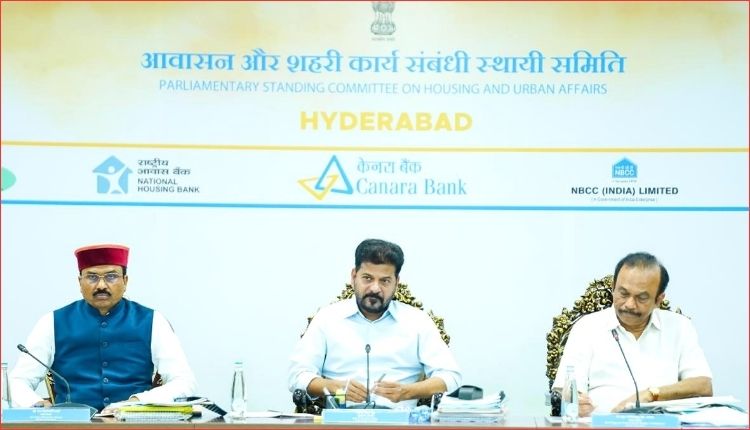
Hyderabad will be transformed into a traffic-free city through an integrated infrastructure approach, Chief Minister A Revanth Reddy declared during an address to the Parliamentary Standing Committee on Urban Affairs and Housing at the Secretariat on Saturday.
Revanth Reddy presented a multi-layered strategy that moves beyond conventional road-widening solutions. The government's plan encompasses the construction of underpasses and elevated corridors alongside surface roads, complemented by multi-level parking facilities and enhanced multi-modal transport systems designed to alleviate congestion across the metropolis.
"Simply expanding existing roads will not resolve Hyderabad's traffic challenges," the Chief Minister stated. "We are establishing multi-level parking facilities throughout the city as we work towards creating a traffic-free urban environment."
The Standing Committee Chairperson M Srinivas Reddy, Congress MP Chamala Kiran Kumar Reddy, and other committee members attended the session.
Regional Economic Zones Framework
Addressing the pressures of rapid urbanization, the Telangana government has adopted a strategic zoning model to manage future growth. The state has been divided into three distinct economic zones under the CURE, PURE, and RARE framework.
Areas within the Outer Ring Road constitute the Core Urban Region Economy (CURE), designated to function as a services and commercial hub. Between the Outer Ring Road and the Regional Ring Road lies the Peri-Urban Region Economy (PURE), which will concentrate on manufacturing and industrial activities. Beyond the Regional Ring Road, the Rural Agriculture Region Economy (RARE) will emphasize agricultural development and related sectors.
The government has also unveiled the Telangana Rising 2047 Master Plan, which charts a long-term development trajectory for the state.
Environmental and Transport Initiatives
The administration is prioritizing pollution reduction and environmental sustainability as part of its urban transformation agenda. The government plans to introduce electric buses into Hyderabad's Regional Transport Corporation fleet, while auto-rickshaws operating within the CURE zone will be retrofitted and converted to electric vehicles at no cost to operators.
Revanth Reddy also briefed the committee on initiatives to rejuvenate the Musi River while maintaining Hyderabad's cultural heritage. Officials presented detailed presentations covering drinking water infrastructure, riverfront development, and broader urban planning initiatives.
The Chief Minister requested the Parliamentary Standing Committee to facilitate enhanced coordination with the Central Government to support Hyderabad's developmental projects.
Committee members commended the Musi River Rejuvenation Project as a transformative initiative and acknowledged the state government's commitment to women's empowerment programs.
Chief Secretary K Ramakrishna Rao and senior officials from state and Central government agencies participated in the meeting.
Compare options