Repairability Emerges as Critical Foundation for India's Circular Economy
India stands at a pivotal moment in its environmental sustainability trajectory. The nation's expanding electronics consumption and increasingly intricate supply chains are reshaping conversations about how goods are manufactured, used, serviced, and ultimately disposed of—making these processes essential to establishing a genuinely circular economy.
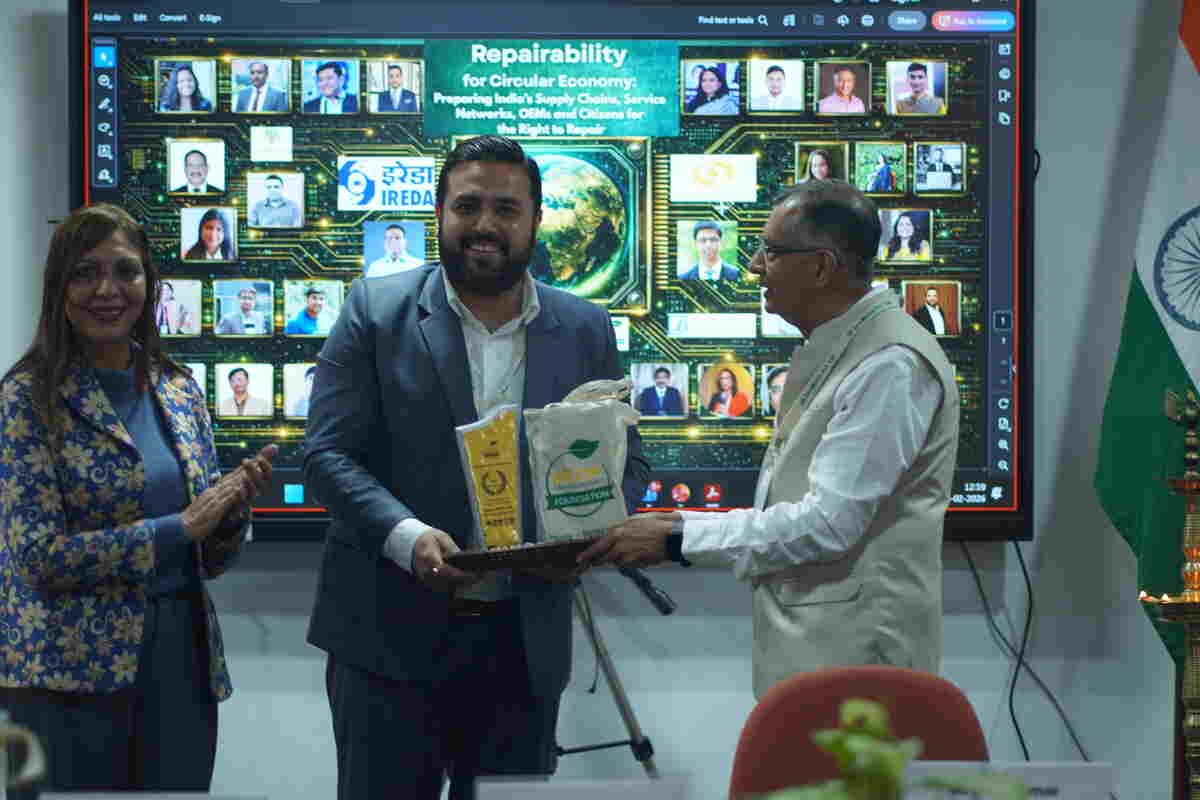
In response to this shift, the 3RZW Environment Foundation and 3RZeroWaste Private Limited, alongside the Material Recycling Association of India (MRAI), organized a dedicated forum featuring Divvye Kohhli to bring together stakeholders for examining repairability's potential as a cornerstone of India's Right to Repair initiative.
Rather than remaining confined to theoretical frameworks, the forum addressed concrete strategies for how manufacturers, supply chains, service networks, and end-users must work in concert to construct circular systems that are both functional and expandable at scale.
Central to the dialogue was a fundamental principle: circular economy models do not originate from recycling processes—they begin with thoughtful product design, maintenance capabilities, and extended product lifespans.
Repairability as a Foundational Circular Approach
Divvye Kohhli stressed during the session that repairability must be embedded within product design from inception. When products are engineered for straightforward repair, modular construction, and extended usable lives, they simultaneously minimize waste generation and unlock economic possibilities within repair, refurbishment, and servicing sectors.
Repairability transcends being merely a technical specification; it functions as a comprehensive framework integrating manufacturers, repair specialists, recycling operators, and users into a sustained economic cycle.
For India, this framework presents a significant avenue to establish systems that are both resilient and resource-conscious while decreasing reliance on virgin material sourcing.
Preparing Industry Infrastructure and Supply Networks
A central theme of the discussion centered on India's capacity to establish repair infrastructure capable of functioning at volume. The path forward demands that manufacturers embed repairability and serviceability into their design processes, that service infrastructure expands geographically to ensure repair accessibility, and that supply chains guarantee the availability of replacement components alongside technical documentation and expertise.
Building Stronger Circular Networks through Unified Action
The forum underscored how multi-stakeholder engagement proves vital to constructing sustainable circular systems. Bodies such as MRAI serve instrumental roles in narrowing industry divides, reinforcing recycling infrastructure, and facilitating communication among government bodies, manufacturers, and recycling enterprises.
India's Right to Repair: A Path Forward
The nascent Right to Repair movement in India offers substantial possibilities—empowering consumers, prolonging product utility, curtailing electronic waste accumulation, and generating employment opportunities within the green economy.
Yet translating this potential into reality demands supportive legislative measures, sector-wide implementation, and comprehensive public education initiatives.
Looking Ahead
The forum with Divvye Kohhli articulated a coherent vision for India's circular economy trajectory—one in which repairability transitions from an exception to an industry standard.
The circular economy has evolved beyond serving solely as an environmental imperative; it now functions as an economic strategy underpinning resource optimization and enduring sustainability.
Compare options