India Must Pursue PLI-2 Reforms to Unlock Manufacturing Growth Potential
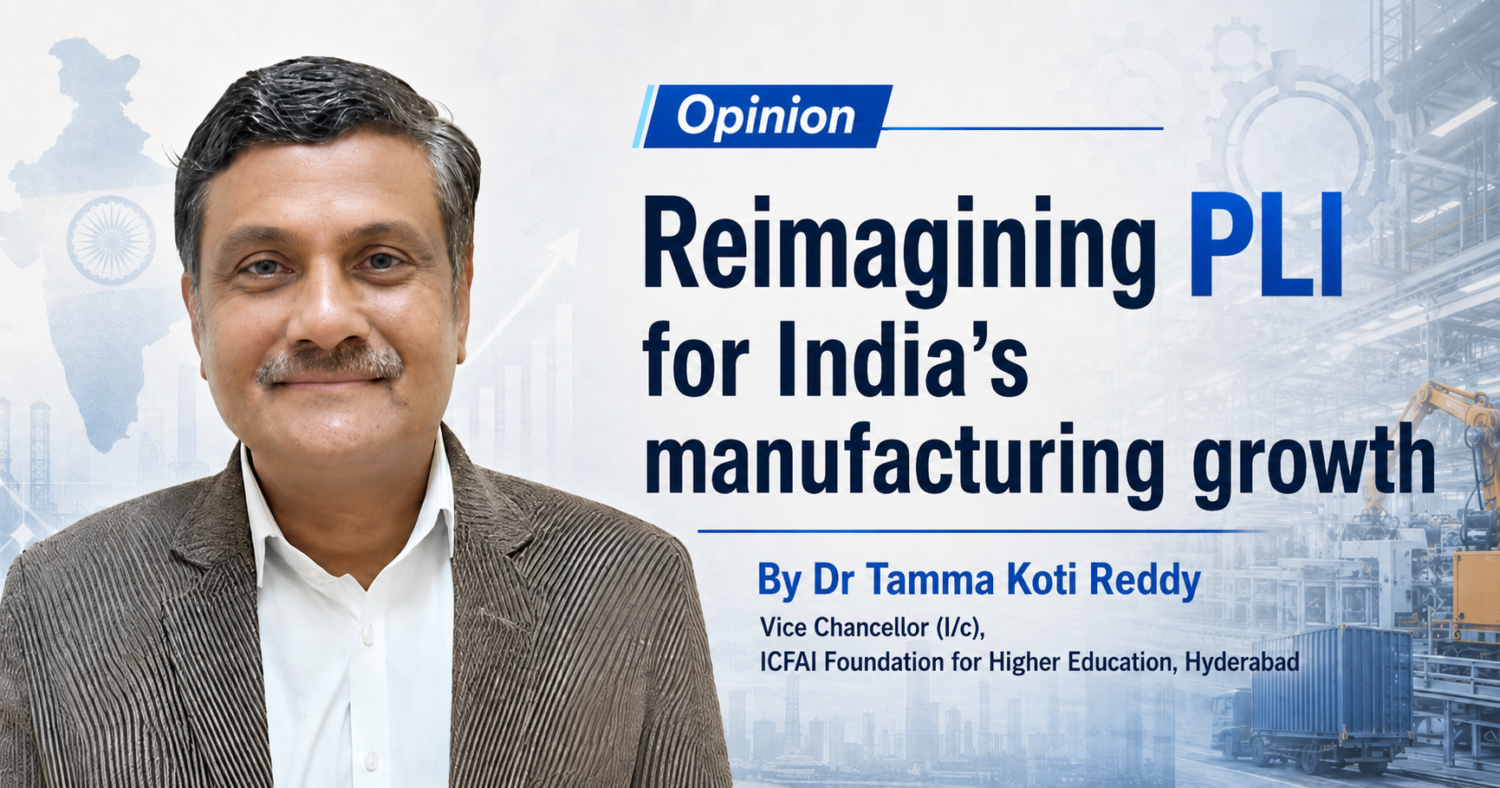
India's Production Linked Incentive (PLI) scheme, introduced in 2020 with an outlay of ₹1.91 lakh crore, was designed to position the country as a global manufacturing powerhouse by boosting domestic output, job creation, and exports. The program offers financial incentives to companies based on their incremental sales growth, targeting strengthening of the manufacturing base.
Performance and Geographic Disparities
Results over the past six years reveal a mixed picture. By February 2026, the scheme had attracted investments exceeding ₹2.16 lakh crore, generated production and sales of over ₹20.41 lakh crore, and created more than 14.39 lakh employment opportunities directly and indirectly. Exports reached ₹8.3 lakh crore, while ₹28,748 crore in incentives were distributed across 14 sectors.
However, benefits have concentrated heavily in already-industrialized regions. Tamil Nadu, Karnataka, Gujarat, Maharashtra, Uttar Pradesh, and Telangana emerged as major beneficiaries, leveraging their existing industrial infrastructure. Meanwhile, states such as Bihar, Jharkhand, and the North-east remain disadvantaged, hampered by inadequate infrastructure and limited skilled labour availability. Punjab, Rajasthan, and Haryana recorded only moderate gains.
Structural Limitations
The scheme's impact on manufacturing's overall contribution to India's GDP remains disappointing. The sector's share has stagnated at 16-17 percent between 2019-20 and 2025-26, showing no meaningful improvement despite the PLI initiative. Among the 14 covered sectors, only mobile phone manufacturing and electronic exports have delivered noteworthy results.
Key challenges undermining the scheme include its focus on assembly-based manufacturing rather than value-addition, persistent dependence on imported components, tardy incentive disbursements, limited technology transfer, vulnerability to international market volatility, and workforce skill gaps. The fiscal burden on government finances has also raised concerns about sustainability.
Partial PLI-2 initiatives currently operate in IT Hardware and specialty steel, with plans to extend similar frameworks to mobile phones and electronics to enhance domestic value creation and integrate these sectors into global supply chains.
Comparative Advantage of Developed Nations
Advanced economies employ markedly different approaches to industrial development. China concentrates on robotics, electric vehicles, artificial intelligence, aerospace, and semiconductors. The European Union prioritizes clean technologies, the United States focuses on semiconductor manufacturing, Japan emphasizes pharmaceuticals and semiconductors, South Korea targets semiconductor production, and Germany concentrates on advanced manufacturing and smart factories.
These nations combine multiple policy tools—subsidies, grants, research and development support, tax credits, and strategic industrial planning—rather than relying solely on production-linked cash incentives. Critically, they have invested heavily in research partnerships linking universities, research institutions, and industry.
The manufacturing sector's contribution to GDP in these economies reflects their strategic focus: China registers 24.7 percent, the EU 14-15 percent, Japan 20-21 percent, the USA 10-11 percent, and South Korea 28 percent.
Path Forward
Realizing India's aspiration to become a $5 trillion economy requires redirecting focus toward micro, small, and medium enterprises in economically backward regions. These segments possess substantial employment and export potential currently underutilized.
Comprehensive PLI-2 reforms must include lowering eligibility criteria to encourage greater MSME participation, ensuring adequate credit availability with reserved incentive portions for smaller enterprises, and promoting innovation-driven manufacturing through enhanced research spending. Infrastructure development in backward districts, streamlined incentive processing, and improved export competitiveness are equally vital.
Additional measures should encompass industry-linked apprenticeship programs, simplified regulatory frameworks, support for labour-intensive sectors to maximize job creation, and alignment of industrial training institutes with PLI-sector requirements. State governments must prioritize governance improvements over inter-state competition for investment attraction.
These reforms are essential if manufacturing is to achieve rapid expansion and increase its GDP contribution to 25 percent, positioning India competitively in global markets.
Compare options