National Fisheries Development Board Convenes Workshop on Cooperative Societies in Hyderabad
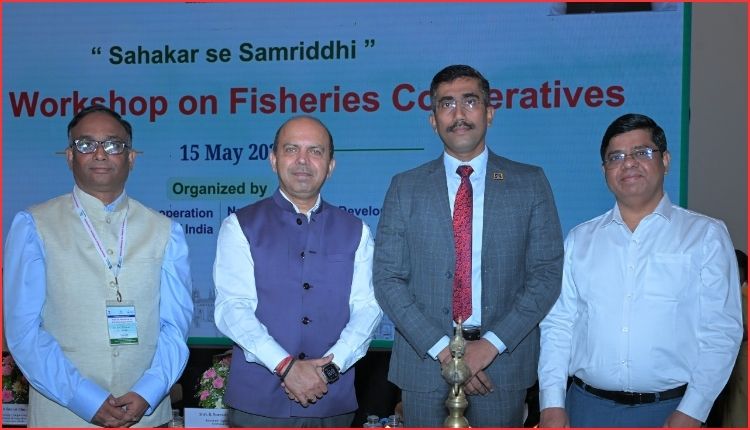
Hyderabad witnessed a significant gathering on Friday as the National Fisheries Development Board organised a workshop focused on fisheries cooperatives and measures to enhance the welfare of fishing communities. The event, held at the Sheraton Hotel, brought together senior government officials, cooperative leaders, representatives from financial institutions, and industry specialists working under the umbrella theme "Sahakar se Samriddhi."
The workshop was jointly hosted by the NFDB in partnership with the Department of Fisheries and the Ministry of Cooperation, drawing both in-person and virtual participants from across the country.
Ambitious Expansion Plans for Cooperative Societies
Speaking virtually at the workshop, Department of Fisheries Secretary Dr Abhilaksh Likhi unveiled an expansive blueprint aimed at creating 6,000 new multipurpose fisheries cooperative societies by 2028-29. Complementing this growth strategy, the department intends to revitalise and strengthen 5,500 existing cooperative societies within the same timeframe.
Dr Likhi pointed to existing government support mechanisms that can facilitate this expansion, including the Pradhan Mantri Matsya Sampada Yojana and the Pradhan Mantri Matsya Kisan Samridhi Sah-Yojana. He emphasised that development in the fisheries sector must be pursued through inclusive approaches and cluster-based models.
Focus on Comprehensive Fisher Support
Dr Ashish Kumar Bhutani, Secretary of the Ministry of Cooperation, noted that his ministry has rolled out more than 150 initiatives over the preceding five years to bolster the cooperative sector. He stressed three critical areas requiring immediate attention: expanding credit availability to fishing communities, establishing stronger connections between producers and markets, and investing in cold-chain infrastructure to reduce post-harvest losses.
Dr Bijay Kumar Behera, Chief Executive of the NFDB, acknowledged that states including Uttar Pradesh, Uttarakhand, Chhattisgarh, Telangana, and Punjab have successfully met or exceeded their targets for cooperative formation. Nevertheless, he cautioned that concerted efforts remain necessary in regions that have fallen short of their cooperative development goals.
Addressing the Credit Challenge
A recurring concern raised during the workshop centred on the persistent credit gap affecting small and marginal fishing communities. Workshop participants noted that many fishers continue to rely on informal credit arrangements, a situation stemming from inadequate access to formal banking channels and institutional credit facilities.
The workshop drew approximately 150 delegates who attended in person, while nearly 1,250 additional participants connected remotely from 34 states and Union Territories across India.
Compare options