MIT-WPU Breakthrough: Solar Thermal Battery Stores Heat for Post-Sunset Hot Water Supply
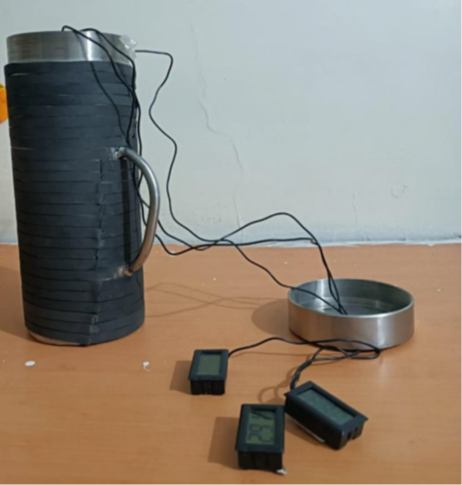
A team of engineers at MIT World Peace University in Pune has unveiled a novel solar thermal storage solution designed to overcome one of renewable energy's fundamental constraints: the intermittent nature of solar power. The system harnesses solar heat through a Scheffler concentrator and stores it in a thermal battery containing paraffin wax, enabling households and institutions to access hot water well into the evening.
The innovation stems from work by Dr. Anita Nene and Dr. Rohit Ghadge from MIT-WPU's Department of Mechanical Engineering. Rather than relying on traditional electrochemical batteries, their approach stores thermal energy directly as heat within a phase change material (PCM) housed in a detachable capsule. The design incorporates a water-jacket mechanism for heat transfer and polyurethane insulation to minimize energy loss.
During laboratory testing, the prototype demonstrated impressive performance metrics. The system achieved full thermal charge in roughly 18 minutes and complete discharge in approximately 32 minutes. Most significantly, it continued supplying hot water after sunlight disappeared, validating its core functionality.
The prototype stores between 1.5 and 2 kilowatt-hours of thermal energy and maintains water temperatures between 50°C and 60°C for up to 14 hours following a full charge cycle. This capability positions the technology as a viable alternative to conventional electric water heaters.
"Solar energy's primary drawback is its availability constraint—it only functions when the sun is present," Dr. Nene explained. "Our goal was to create a straightforward, economically viable, and environmentally responsible thermal storage mechanism that captures solar energy for use on demand."
Dr. Rohit Ghadge emphasized the broader energy implications: "Thermal applications consume a significant portion of global energy resources. Systems that efficiently capture and store solar heat can diminish reliance on conventional fuels, strengthen energy independence, and facilitate the shift toward renewable and sustainable energy infrastructure."
The development process included rigorous Computational Fluid Dynamics simulations alongside hands-on laboratory validation to assess performance characteristics. The technology currently stands at Technology Readiness Level 7, positioning it for real-world deployment trials.
Potential uses span diverse sectors including residential heating, hospitality establishments, healthcare facilities, educational campuses, industrial heating operations, community meal preparation facilities, farming applications, and remote communities without grid access. Implementation across these sectors could reduce carbon emissions by approximately 2.5 to 3 tonnes annually, supporting India's renewable energy and climate objectives.
An Indian patent application titled "Solar Energy Storage Capsule Using Phase Change Material" has been submitted under Application No. 202521118546. The research team is actively seeking partnerships with industrial stakeholders to advance pilot testing and bring the technology to market.
"Upcoming efforts will emphasize field testing, efficiency enhancements, and expansion for commercial-scale manufacturing," Dr. Nene indicated.
Compare options