India's Fibre Deficit: Seven in Ten Fall Below Recommended Daily Intake
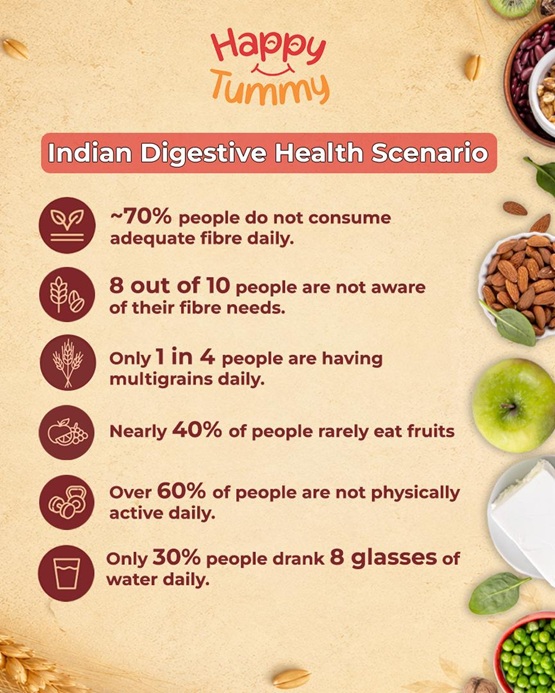
India faces a significant nutritional shortfall in daily fibre consumption, according to findings released by Aashirvaad Happy Tummy on World Digestive Health Day. The research, drawing from responses collected between 2021 and 2025 from more than 6.5 lakh individuals across the country, underscores the extent of the problem and its roots in both dietary patterns and lifestyle factors.
The data presents a stark picture: roughly 70% of Indians are not consuming adequate amounts of dietary fibre. The disparity between genders is notable, with over 73% of women falling below recommended levels compared to approximately 63% of men. These shortfalls come despite growing global conversation around the benefits of fibre-rich diets.
The Indian Council of Medical Research's National Institute of Nutrition establishes clear benchmarks for daily fibre intake: women should consume at least 25 grams daily, while men require 30 grams. Yet the research indicates that achieving these targets remains elusive for most.
Food consumption patterns offer insight into why these targets go unmet. Only one quarter of respondents report eating multigrains as part of their daily routine. Fruit consumption presents an even more concerning picture, with nearly 40% rarely incorporating fruits into their meals. While vegetable intake fares somewhat better, the overall diversity of food groups remains insufficient to support consistent fibre targets.
Beyond diet, multiple lifestyle factors compound the problem. More than 60% of participants do not engage in daily physical activity. Water intake also falls short among most respondents, with approximately 30% meeting recommended levels. Sleep deprivation affects a substantial portion of the population, with nearly half reporting inadequate rest. Mental health pressures are evident as well, with one in five individuals experiencing severe stress.
Anuj Rustagi, Business Unit Chief Executive of Staples at ITC Ltd., emphasised the broader health implications. "As digestive wellness gains prominence in nutrition discussions, these findings reveal an urgent need to increase awareness about fibre's contribution to overall health," Rustagi stated. "Meaningful progress requires sustainable dietary upgrades and the incorporation of fibre-dense foods including whole grains, fruits, and vegetables."
To address this gap, Aashirvaad Atta with Multigrains has launched "Happy Tummy, Happy You," an awareness initiative featuring health professionals and content creators. The campaign utilises podcasts, educational materials, and interactive forums to foster informed dialogue about digestive health. Health experts consistently stress the importance of fibre-rich whole grains, combined with adequate hydration, sufficient sleep, and regular physical activity for maintaining gut health.
The Happy Tummy platform provides practical resources for individuals seeking to improve their digestive health. Users can access the Digestive Quotient Test and Fibre Meter tools to assess their current status and identify actionable changes to daily habits.
The research encompasses self-reported data from participants aged 18 to 60 years collected through the Aashirvaad Happy Tummy platform.
Compare options