India and UK Inaugurate Joint Critical Minerals Observatory
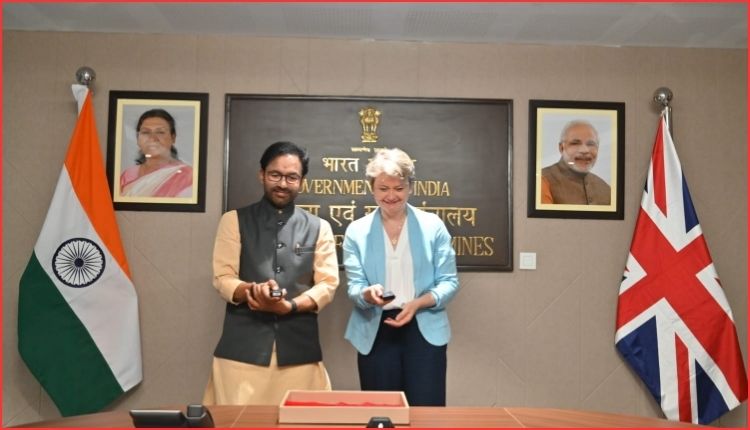
Union Coal and Mines Minister G. Kishan Reddy opened the India-UK Critical Minerals Observatory in New Delhi on Thursday, marking a significant step in deepening bilateral ties on mineral security and supply chain resilience.
The event saw the participation of UK Secretary of State for Foreign, Commonwealth and Development Affairs Yvette Cooper, underscoring the importance both nations place on the initiative.
Developed through a partnership involving TEXMiN, the Indian Institute of Technology (ISM) Dhanbad, and the University of Cambridge, the Observatory seeks to foster stronger collaboration between India and the United Kingdom in safeguarding and monitoring critical mineral supply chains.
Speaking at the inauguration, Minister Reddy highlighted the strategic importance of critical minerals across multiple sectors. He noted that these materials are fundamental to clean energy technologies, electric vehicle production, advanced manufacturing, and defence applications. The Observatory, he explained, would bolster India's capacity to track supply chain movements and advance the goals outlined in the National Critical Mineral Mission.
Reddy further stressed that dependable access to critical minerals remains crucial for both technological progress and industrial expansion. The platform, he added, would enable policymakers and industry leaders to make well-informed decisions regarding mineral security.
The bilateral initiative traces its origins to discussions between India's and the UK's Prime Ministers in October 2025. The two governments subsequently formalised their partnership through a research agreement finalised in March 2026.
The Observatory will function as a real-time tracking system for global critical mineral supply chains. Beyond monitoring, it will flag potential supply disruptions and furnish market insights to support policymakers, academics, and business stakeholders in their strategic planning.
Cooper emphasised that enhanced cooperation and data exchange on critical minerals would generate mutual benefits for economic development, supply chain stability, and sustainable growth in both nations. She also underscored how joint efforts would prove instrumental in tackling emerging threats within the worldwide mineral supply network.
Compare options