Telangana Sets Summer 2027 Target for Kaleshwaram Barrage Restoration
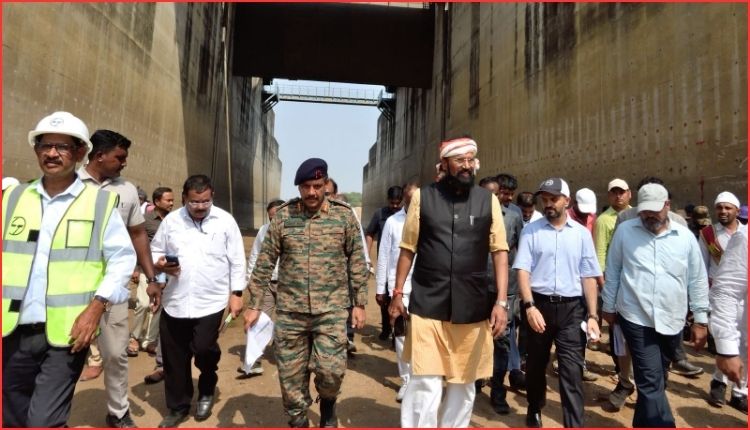
Telangana's Irrigation Minister N. Uttam Kumar Reddy has announced that the state government aims to complete restoration of the Kaleshwaram barrage by summer 2027, following the completion of comprehensive technical assessments and regulatory approvals.
The minister outlined an extensive technical roadmap that encompasses investigations, testing, design preparation, regulatory clearances and execution of rehabilitation work. During a site visit on Wednesday, Reddy reviewed the progress of investigation, testing and rehabilitation planning activities.
The state has accelerated multiple technical studies, including hydrological assessments, ground-penetrating radar (GPR) testing, and geotechnical borehole investigations. Most preliminary investigations have already been concluded, with the remaining studies expected to be finished by the end of June or the first week of July.
Following receipt of findings from ongoing technical studies, engineers will develop detailed rehabilitation designs. The government will then submit these designs to the Central Water Commission (CWC) and the National Dam Safety Authority (NDSA) for formal approval.
Rehabilitation work is anticipated to commence after the monsoon season, with construction activities potentially beginning by the end of November or the first week of December. The government plans to complete the entire restoration programme within a single working season.
Reddy stated that the Congress government remains focused on accountability, safety and timely completion, emphasising that proper and secure restoration of the barrages is the priority. He acknowledged that serious mistakes had affected the project historically.
The Dr B.R. Ambedkar Pranahita-Chevella Project was originally launched by a previous Congress government with an estimated cost of Rs 38,000 crore. Nearly one-third of the project had been completed before 2014, and Reddy claimed the original project could have been finished around 2016-17 if the initial plan had been maintained.
The original project was designed to irrigate approximately 16 lakh acres. However, a subsequent shift in the project scope significantly increased costs. The project expenditure, initially estimated at Rs 38,000 crore, has now exceeded Rs 1 lakh crore. Comptroller and Auditor General estimates suggest expenditure could reach nearly Rs 1.45 lakh crore. Despite this spending, the three barrages have remained non-operational since December 7, 2023.
Reddy noted that earlier project designs had not fully incorporated the actual operational requirements of the barrages, particularly regarding gate operations at lower openings. The current studies are expected to address these deficiencies and ensure long-term safety and stability.
GPR testing across the three barrages has reached 80 to 90 per cent completion, while borehole drilling and geotechnical investigations have progressed to approximately 75 to 80 per cent. Officials have drilled boreholes to depths ranging from 40 metres to 80 metres to obtain deeper geological information.
The government has committed to undertaking all future designs, repairs and additional works only after obtaining concurrence from the CWC and NDSA, ensuring the rehabilitated barrages remain safe and functional for decades to come.
Compare options


