IIT Mandi Researchers Uncover Synchronized Cellular Response to Anaesthesia in Plants
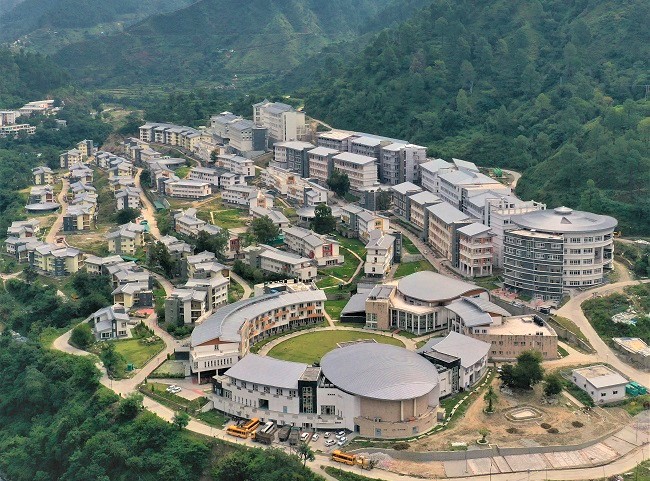
A team of researchers at the Indian Institute of Technology Mandi has made a significant scientific discovery regarding how plants respond to anaesthetic substances. Their work challenges conventional understanding of consciousness and suggests that living organisms without brains may possess cellular signatures comparable to those of neuronal systems.
The research, led by Prof. Laxmidhar Behera, Director of IIT Mandi, and Prof. Chayan Kanti Nandi, resulted in two major publications: one in Advanced Biology (2025) and another in Chemical & Biomedical Imaging (2026). The studies demonstrate that plant cells exhibit highly synchronized reactions to anaesthesia through a mechanism the scientists term a "hierarchical cascade of organellar silencing."
Understanding the Research Approach
The scientists posed fundamental questions about whether anaesthesia functions similarly in organisms without nervous systems as it does in those with brains. They investigated whether cellular-level biomarkers could reveal conscious states in plants. Using advanced live-cell microscopy, the team examined how anaesthetic substances affected cells in tomato (Solanum lycopersicum) and brinjal (Solanum melongena) plants.
The researchers focused on the root apex, particularly the root cap region, which perceives and processes information to guide growth and resource distribution. This area is sometimes referred to as the "root brain" due to its role in decentralized plant intelligence. The root apex's transparent tissues and organized cellular structures made it ideal for microscopic analysis.
Sequential Shutdown and Recovery
In their first major finding, the team identified a precise, ordered sequence of cellular shutdown under anaesthetic stress. Different organelles—including mitochondria, lysosomes, vesicle trafficking systems, chloroplasts, and nuclear structures—ceased functioning in a specific, predictable pattern. Notably, the nucleus was the last to shut down. When the anaesthetic was removed, recovery occurred in reverse sequence, with the nucleus orchestrating the restoration of normal cellular function.
This behavior suggested not a passive chemical reaction, but an organized, coordinated response system.
The Remarkable Discovery of Synchronized Nuclei
The most striking finding emerged from a subsequent experiment. Within plant cells, DNA exists in two forms: euchromatin (genetically active, loosely packed) and heterochromatin (inactive, tightly packed). Under normal conditions, nuclei are randomly positioned and move throughout cells. However, under anaesthesia, all nuclei in the plant became highly organized and responded in a coordinated manner.
Strikingly, the euchromatin in every nucleus simultaneously moved to the outer edge of the nucleus, while heterochromatin remained stationary. This synchronization occurred across all cells simultaneously—despite the absence of neurons or known communication pathways connecting them.
"This happened in all the cells at the same time — even though those cells have no neurons connecting them, no known rapid-communication pathway between them. Yet every nucleus reorganised itself identically, simultaneously," the researchers noted.
This discovery points to a form of nucleus-to-nucleus communication operating in organisms without brains or nervous systems. The scientists proposed that nuclear-chromatin reorganization may serve as a conserved biomarker of the anaesthetized state across both neuronal and non-neuronal systems.
Connections to Ancient Indian Philosophy
Prof. Laxmidhar Behera observed profound parallels between the findings and ancient Indian philosophical traditions. The Indian Knowledge Systems (IKS) have long conceptualized consciousness—chetana in Sanskrit—not as a product of the brain alone, but as a fundamental, non-local property present throughout living matter.
"The IKS view of the non-local nature of consciousness is particularly seen in the simultaneous reorganisation of nuclei and the circumambulation of the nuclear periphery by euchromatins. The fact that euchromatins have emerged as consciousness biomarkers means that more research work is necessary to establish the non-locality of conscious interactions at the cellular level," Prof. Behera stated.
Vedic traditions describe consciousness as pervading all levels of existence, from gross matter through subtle life-force to awareness. The cellular-level observations now align with these long-held philosophical perspectives about consciousness's pervasive, non-local character.
Future Directions
The research team is expanding its investigation to test whether similar nuclear reorganization patterns appear across different biological systems. Current studies examine anaesthetic effects in C. elegans, a microscopic roundworm whose simple nervous system occupies an intermediate position in biological complexity between plants and animals. If the same euchromatin response appears in these organisms, evidence for a universal, non-local cellular signature of consciousness would strengthen considerably.
The findings suggest that the botanical world around us may possess levels of sentience and coordinated response previously underestimated by science.
Compare options