Maruti Suzuki Introduces India's First Flex-Fuel Vehicle Amid Push for Energy Independence
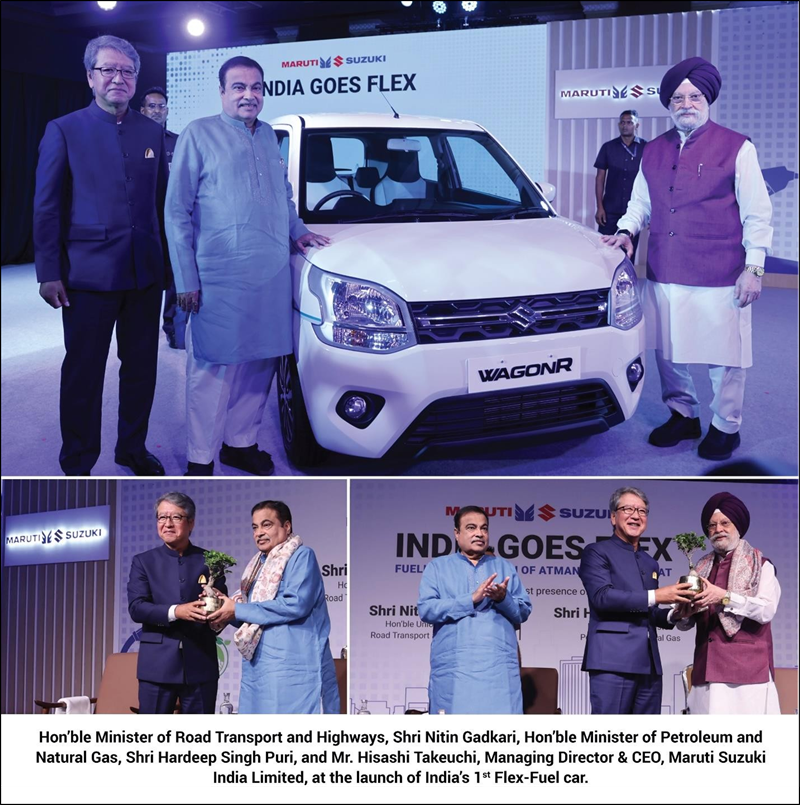
Chennai — Marking a milestone in India's renewable energy transition, Maruti Suzuki unveiled the nation's first flex-fuel automobile on the occasion of World Environment Day, underscoring the government's Atmanirbhar Bharat agenda. The launch ceremony in Chennai drew Union Minister of Road Transport and Highways Nitin Gadkari and Union Minister of Petroleum and Natural Gas Hardeep Singh Puri.
The newly introduced vehicle, based on the popular Wagon R model, represents a departure from conventional petrol-only engines. Flex-fuel technology enables drivers to operate the car using various ethanol-petrol combinations, ranging from E20 through E100 formulations. The Wagon R has established itself as a pioneer in alternative fuel adoption across India, previously introducing CNG and LPG variants to consumers.
Gadkari highlighted the strategic importance of the development during his remarks at the event. He noted that India's substantial annual crude oil imports underscore the necessity for biofuel alternatives like ethanol to diminish external energy reliance while bolstering rural economic development. According to Gadkari, flex-fuel vehicles promise to establish consistent demand for ethanol, simultaneously benefiting agricultural communities, industrial sectors, and environmental objectives. He further expressed confidence that this initiative would inspire competing manufacturers to develop their own flex-fuel offerings and prompt the petroleum sector to expand ethanol distribution networks.
Puri echoed these sentiments, characterizing India's ethanol trajectory as unstoppable. Under Prime Minister Narendra Modi's administration, he stated, the nation has transitioned farmers from food producers to energy providers while fortifying India's energy resilience. He described flex-fuel vehicles as mutually advantageous for the nation, delivering multiple benefits including reduced crude oil dependence, conservation of foreign currency reserves, emissions reduction, and economic opportunities for rural populations.
Hisashi Takeuchi, Managing Director and Chief Executive Officer of Maruti Suzuki India Limited, positioned the company's strategy within a broader technological framework. He emphasized Maruti Suzuki's commitment to offering vehicles powered by diverse technologies and fuel sources, including battery electric vehicles, hybrid systems, compressed natural gas, compressed biogas, and ethanol flex-fuel options. These offerings align with India's dual objectives of curtailing petroleum imports and reducing carbon emissions.
Takeuchi acknowledged that India's ethanol infrastructure remains nascent, prompting Maruti Suzuki to assume responsibility for advancing mainstream adoption. When flex-fuel vehicles achieve widespread market penetration, he suggested, they possess considerable potential to diminish oil imports, lower carbon emissions, reduce localized air pollution, and simultaneously increase domestic value creation and farmer earnings.
Compare options


