Communities in Odisha and Andhra Pradesh Lead the Way in Landscape Restoration
A policy paper released in May 2026 through the Open Archive of social science (SocArXiv) highlights the transformative work of communities across Odisha and Andhra Pradesh who are managing land, water, and forests as interconnected systems rather than isolated concerns. The research, titled "The Centrality of Area-Based Approaches in Sustainable Development," draws from ground-level experiences and expert deliberations at the Commons Convening 2024 in New Delhi and the India Land and Development Conference 2025 in Ahmedabad.
The paper demonstrates that the area-based approach employed by these communities can be successfully scaled up, offering India a powerful model for managing its most strained natural resources.
The Scale of Environmental Stress
India's environmental challenges are severe. With 16% of the world's population but only 2.4% of its land area, the nation's natural resources face mounting pressure. By 2018–19, approximately 98 million hectares—roughly 30% of India's total land area—was already degrading. The country has witnessed the loss of an estimated 90% of its four biodiversity hotspots. Additionally, nearly half of India's agricultural land is cultivated by small and marginal farmers, who face heightened vulnerability to climate change impacts.
Communities in Keonjhar and Koraput in Odisha, as well as across Andhra Pradesh, operate within these challenging conditions, yet they are demonstrating viable responses.
A Shift Toward Integrated Systems
The critical transformation these communities have undergone involves moving away from isolated, scheme-based interventions toward treating entire landscapes—encompassing soil, water, forests, crops, and populations—as unified systems.
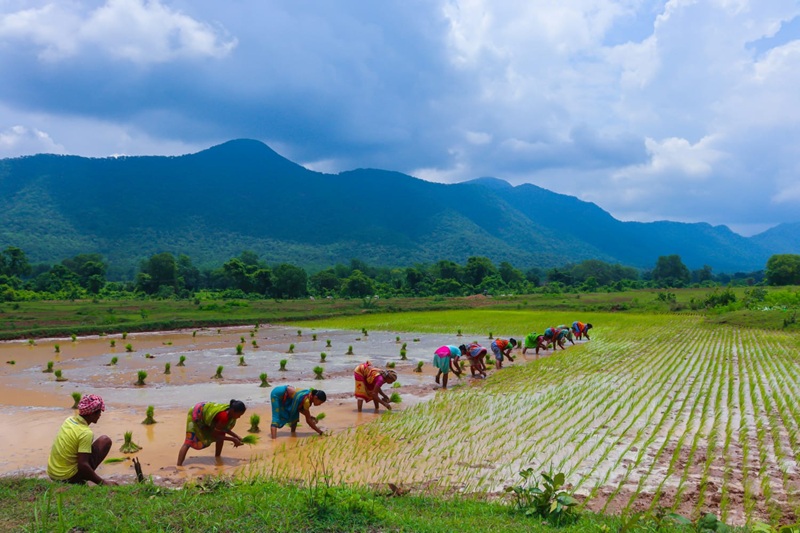
In Keonjhar, the Women's Organisation for Socio-Cultural Awareness (WOSCA) facilitated collaboration among local government bodies, civil society groups, and residents around a comprehensive landscape strategy. By equipping communities with digital mapping tools alongside their traditional knowledge, the initiative produced tangible results: rising water tables, enhanced soil moisture, and improved crop yields. Agricultural losses to drought became less frequent.
Mansingh Durga Prasad Naik of WOSCA notes that women in self-help groups are emerging as stewards and change agents. He emphasizes that when communities gain access to data and work alongside civil society and community-based organizations, systemic change becomes possible.
In Koraput, Watershed Support Services and Activities Network (WASSAN) established a multi-actor platform bringing together farmers, women's groups, government departments, and civil society organizations for regular meetings, data sharing, and collaborative planning. A blended finance structure was developed, combining public schemes, philanthropic funding, and community credit—recognizing that landscape restoration requires diverse financial sources.
Andhra Pradesh's community-managed natural farming programme demonstrates scale. Operating across over a million farmers and nearly half a million hectares, it stands as the world's largest natural farming initiative. Like efforts in Koraput and Keonjhar, it integrates multiple stakeholders through women's self-help groups that facilitate farmer-to-farmer learning and local accountability.
G. Murlidhar from Rythu Sadhikara Samstha (RySS) in Andhra Pradesh stresses that area-based approaches cannot depend on fixed blueprints but demand progressive, adaptive strategies. He advises: "Don't wait for a complete plan, the complete plan never happens. When will there be a complete, comprehensive plan? Start with anything quickly."
From Practice to Policy
The paper identifies five interconnected shifts necessary for area-based approaches to transition from promising examples to mainstream implementation: adopting systems thinking in planning, leveraging data and digital tools more effectively, enabling community-led design from the bottom up, establishing financial structures aligned with ecological timescales including direct benefit transfer schemes, and strengthening alignment between policy objectives and on-ground execution.
Dr. Veena Srinivasan from Water, Environment, Land and Livelihoods (WELL) Labs underscores that this transition demands a fundamental reorientation away from models where individual grassroots organizations own specific landscapes. Under area-based thinking, decision-making authority should rest with community-based organizations—whether self-help groups, water user cooperatives, or farmer producer organizations—comprising residents who intend to steward their landscapes long-term.
Moving Forward
The paper advocates for area-based approaches to be embedded within India's natural resource planning framework as an organizing principle that aligns existing programmes, communities, and investments with the social-ecological characteristics of particular locations.
Concrete pathways forward include adopting digital planning platforms like Know Your Landscape and Gramify to support participatory landscape-level planning, implementing blended finance models to sustain extended landscape investments, and establishing village-level field schools that demonstrate and disseminate proven practices.
The research confirms that India possesses the knowledge, tools, and community institutions required for landscape restoration. The challenge now lies in learning from existing successes and building upon them.
Compare options