Chandigarh Startup Bridges Gap Between Disaster-Damaged Goods and Industrial Reuse
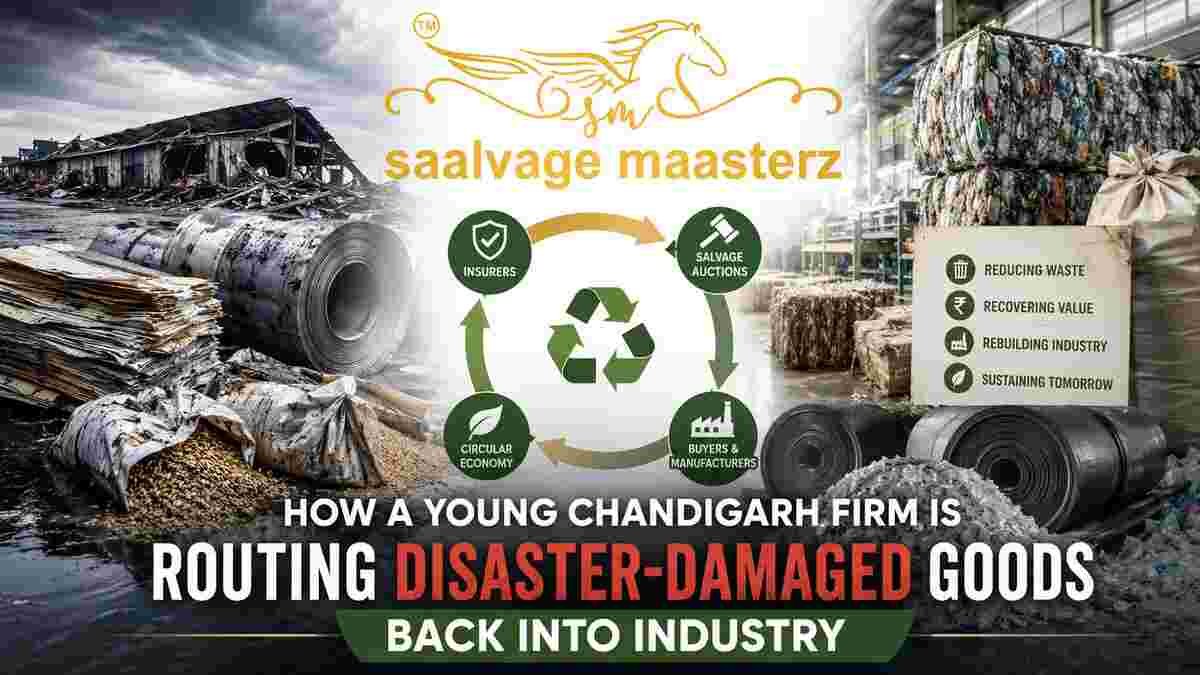
Across India, natural disasters and industrial accidents destroy vast quantities of materials annually. Factory fires warp metal coils beyond immediate use. Flooding soaks paper pulp into unusable sheets. Cyclones scatter inventory. Traffic mishaps damage goods in transit. For decades, this damaged material—worth crores of rupees each year—has been discarded as scrap or buried in landfills.
A salvage management company based in Chandigarh is attempting to redirect this flow. Rather than processing the materials themselves, Saalvage Maasterz identifies insurance salvage auctions, acquires the damaged goods, and connects them to manufacturers, recyclers, and traders who can reintegrate them into production cycles.
India's Circular Economy Momentum
India is accelerating its transition from linear consumption patterns toward resource recovery and reuse. Union Environment Minister Bhupender Yadav has projected that the nation's circular economy could expand to a market size of $2 trillion while generating approximately 10 million jobs by 2050. The country currently produces roughly 62 million tonnes of waste annually, with plastic and other recoverable materials representing rapidly expanding waste streams.
Within this landscape lies a largely overlooked commercial opportunity: the salvage chain following insured damage events. When property damage occurs, insurers settle claims and auction the damaged inventory. Much of this material retains significant value—bent metal can be remelted, waterlogged paper can be repulped, and salvaged grain, plastics, and films can re-enter their original supply chains. The missing link has been the intermediary infrastructure to match salvage supply with buyer demand.
Closing the Connection Gap
Saalvage Maasterz operates precisely in this space. The firm maintains registration and panel status with major Indian insurance companies, participates in salvage auctions, and redistributes recovered materials to end users. Its inventory spans metals, paper, plastics, tyres, films, and grains—channelled to buyers at competitive rates.
Since its registration in 2024, the company has executed 98 salvage transactions involving 83 distinct buyers, moving more than 1,600 tonnes of recovered material back into industrial supply chains alongside additional quantities measured by piece count and square metres. The founding team brings several years of prior experience within the salvage sector.
Economic and Environmental Rationale
The business case for salvage reuse operates on straightforward economics. Recovered materials typically cost substantially less than virgin raw materials, enabling manufacturers—particularly cost-conscious small and medium enterprises—to reduce input expenses. Simultaneously, diverting usable goods from landfills eases environmental pressure at a moment when India's disposal infrastructure faces mounting strain.
The company structures its operations around three core principles: reliability, resourcefulness, and pragmatism. Each transaction follows a defined workflow: case analysis, detailed documentation, physical inspection facilitation, and logistics coordination upon deal completion.
Growing Role in Industrial Recovery
As regulatory mandates like Extended Producer Responsibility expand and industrial demand for recovered materials increases across packaging, construction, and manufacturing sectors, intermediary firms capable of efficiently routing salvage back into supply chains are expected to assume greater significance in India's circular economy development.
Saalvage Maasterz holds ISO 9001:2015 certification and operates nationwide from its Chandigarh headquarters.
Compare options