Greenwood High Alumni Win Top Prize at Purdue AI Research Showcase for Semiconductor Defect Detection
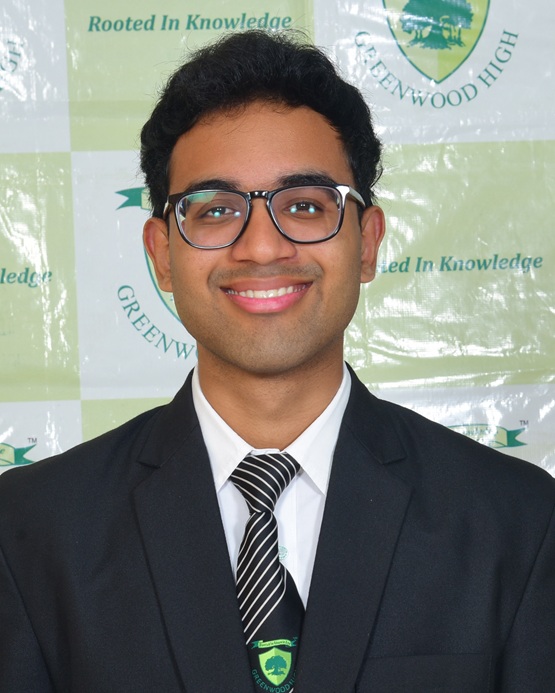
Bangalore—Greenwood High's alumni network has achieved significant recognition at an international research forum, with two former students earning top honors for their groundbreaking work in artificial intelligence.
Rishikesh Madhuvairy, who graduated in 2025 and now studies at Rice University, and Rahul Prabhu, a 2024 graduate currently in his second year at Purdue University, claimed first place in the Poster Competition at Purdue University's AI Research Showcase 2026. The prestigious event convened researchers, industry professionals, and students from around the world to showcase innovations in artificial intelligence and their practical applications across sectors.
Their winning submission centered on creating an intelligent system for identifying defects in semiconductor wafers—a persistent problem affecting the quality and efficiency of chip manufacturing. Using advanced machine learning methods, the model can spot microscopic imperfections faster and more reliably than conventional approaches, thereby enhancing product quality and manufacturing performance.
Semiconductors form the technological foundation of contemporary society, embedded in devices ranging from mobile phones and laptops to vehicles and medical equipment. As manufacturing processes grow more intricate, even minor flaws can compromise device performance and reduce production yields. The integration of artificial intelligence into defect detection represents a significant advancement, enabling manufacturers to conduct faster and more thorough quality inspections. Organizations worldwide are increasingly adopting AI-based inspection methods to strengthen semiconductor production.
The paper titled "Fusing Handcrafted spatial descriptors with a lightweight CNN for Semiconductor wafer Map Detection Classification" outlined their approach to categorizing defects found on two-dimensional semiconductor wafer surfaces and determining where these defects originate during manufacturing.
"Our goal was to develop an automated system for forecasting and categorizing defects that emerge regularly in production," explained Madhuvairy. "The model we developed could eventually be integrated into a yield intelligence system that would allow quality control specialists to pinpoint exactly where and how defects form spatially across silicon wafers."
Prabhu noted that while merging statistical analysis with computer vision is not unprecedented, "applying this approach to semiconductor defect classification using actual industry data represents something genuinely novel."
The researchers' model diverges from existing state-of-the-art systems, which typically rely on intricate algorithms requiring data to be analyzed at remote facilities. Instead, Madhuvairy and Prabhu engineered a highly precise, rapid-response system deployable directly at manufacturing sites. The innovation incorporates eight spatial descriptors designed to map where defects occur on wafers and whether they appear scattered or concentrated. This combination of spatial markers and a convolutional neural network—a machine learning architecture optimized for image analysis—enabled them to identify and sort semiconductor defects with approximately 13 percent greater accuracy compared to standard computer vision techniques.
The project's success hinged on contributions from both researchers' distinct specializations. "I entered this work without substantial computer vision background," Madhuvairy reflected. "I contributed theoretical knowledge about spatial classification, but transforming that into a practical commercial application demands different capabilities. Rahul's knowledge in developing the vision model proved invaluable, and his work taught me considerably."
Niru Agarwal, Managing Trustee at Greenwood High International School in Bengaluru, commended the achievement: "We extend our congratulations to Rishikesh Madhuvairy and Rahul Prabhu for this exceptional accomplishment and for representing Greenwood High with distinction on the world stage. Their success reflects our institution's commitment to developing forward-thinking leaders, researchers, and innovators. Their recognition should motivate current students by illustrating how rigorous education, combined with determination and hard work, can produce remarkable outcomes globally."
Madhuvairy's involvement in the semiconductor research stems from his deep interest in device physics. He is pursuing several additional research initiatives with potential applications spanning clean energy solutions and portable health monitoring systems.
Looking ahead, the two researchers plan to enhance their model's capabilities, implement it within an actual manufacturing environment, and pursue commercialization opportunities. The accomplishment underscores Greenwood High's position as a source of talent driving technological progress in fields poised to reshape global industries.
Compare options


