Prisons Must Transform Into Rehabilitation Centres, Says Governor
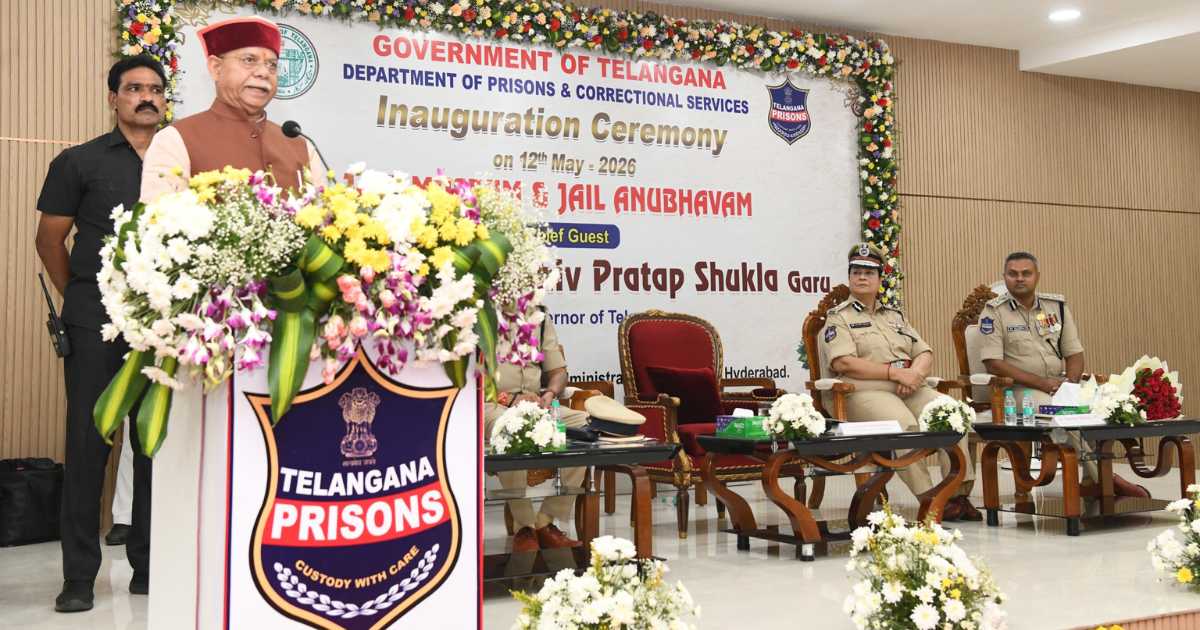
Hyderabad: The Governor has articulated a vision for India's correctional system to prioritise rehabilitation over punishment, emphasising that society bears a collective responsibility for reforming those who have committed offences.
Shiv Pratap Shukla conveyed this perspective on Tuesday during the inauguration of two new initiatives at the State Institute of Correctional Administration in Chanchalguda—the "Feel the Jail" experiential programme and the Jail Museum.
The "Feel the Jail" installation features specially constructed cells designed to give visitors an immersive experience of incarceration and the conditions endured by prisoners. The Governor spent time examining these replicated cells during his tour.
The newly opened Jail Museum traces the institutional history of prisons and their development over time. Its exhibits span multiple eras, including the period of Nizam rule, and chronicle prisoner contributions to significant infrastructure projects such as the Nagarjuna Sagar Dam. The museum also features recreations of prison cells associated with historical figures including Dasarathi Krishnamacharyulu and Kancherla Gopanna.
Additional displays showcase modern correctional approaches, detailing rehabilitation programmes, industrial activities within prisons, and goods produced by incarcerated individuals. Visitors were also shown a film titled "Valmiki," which documents programmes designed to encourage behavioural reform among prisoners.
Speaking to those assembled, the Governor characterised the museum as a meaningful contribution toward establishing a justice system grounded in compassion and transformation rather than retribution. He contrasted the exhibits of outdated restraints and confinement methods—symbols of historical punitive approaches—with contemporary displays emphasising skill-building and prisoner-manufactured goods, illustrating the shift from vengeance to rehabilitation.
"The calibre of any civilised society reveals itself through the manner in which it undertakes the reformation of those who have transgressed," Shukla remarked.
The Governor underscored that reforming prisoners constitutes a fundamental ethical obligation for society at large. He advocated for correctional institutions that foster self-reflection, personal growth, and pathways toward reintegration.
Shukla acknowledged the work of Soumya Mishra and her colleagues in developing and executing the initiative. He projected that the museum would establish itself as a significant resource for educational purposes, scholarly inquiry, community engagement, and cultural tourism.
Compare options