Wheat Straw Emerges as Viable Alternative to Forest Fibres in Fashion Industry
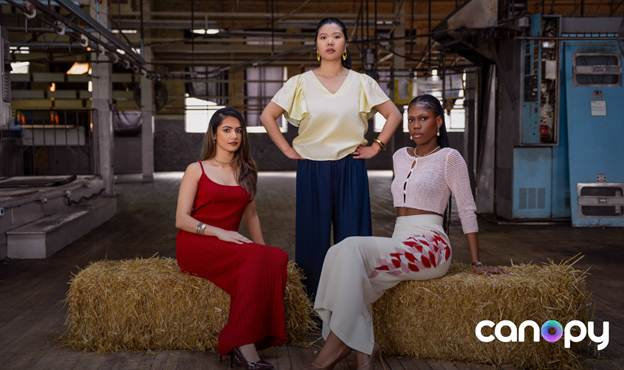
Environmental organisation Canopy has released findings from a significant pilot initiative demonstrating that wheat straw can be transformed into high-quality sustainable viscose and lyocell fibres suitable for the fashion industry. The development promises to decrease dependency on forest-derived materials, mitigate air pollution, and generate fresh economic opportunities in rural areas.
The report, titled "From Wheat Straw to Wardrobes: Fashioning a new fibre future," documents the outcomes of an experimental programme that examined whether pulp manufactured from Indian wheat straw could effectively produce high-quality viscose and lyocell fibres as a substitute for conventional wood-based pulp.
The pilot findings indicate that wheat straw pulp can directly substitute for wood-based pulp in both viscose and lyocell fibre manufacturing, while simultaneously enabling the creation of diverse yarns and textiles that satisfy brand specifications and technical requirements across numerous applications.
Man-Made Cellulosic Fibres (MMCFs) such as viscose and lyocell are typically manufactured using wood-derived pulp. Though frequently marketed as environmentally superior alternatives to synthetic materials like polyester and natural cotton due to their tree-based origins, analysis reveals a troubling reality: approximately 300 million trees are harvested annually for these fibres, with significant quantities sourced from ecologically vital and biodiverse forest regions. Preserving these forests represents among the most efficient and economical strategies for reducing carbon emissions and advancing the international "30×30" biodiversity initiative, which seeks to safeguard 30 percent of terrestrial and aquatic ecosystems by 2030.
The initiative, designated Project Latvus, assembled a collaborative consortium including nonprofits Canopy and Fashion for Good, fashion retailers C&A, H&M Group, and Reformation, supply chain specialists and production facilities Chempolis, TITK, Inovafil, Yee Chain, Shahi, Filpucci, and DBL, traceability technology provider Textile Genesis, and agricultural residue supplier A2P (Agri to Power) Energy. Laudes Foundation provided financial backing, building upon an earlier initiative called Spinning Future Threads, which had previously established the technical feasibility of utilising agricultural residue as a textile feedstock. By coordinating across the entire production network—from cultivation through finished garment—Project Latvus sought to systematically identify and address obstacles that typically impede the commercialisation of novel materials.
Reformation representatives and TITK personnel observed that the resulting fibre demonstrated visual and tactile characteristics comparable to standard lyocell while delivering the performance metrics necessary for industrial-scale deployment. Additional participants in the supply chain likewise expressed optimism regarding the material's commercial viability.
Canopy, which coordinated the project and prepared the report, emphasises that diverse feedstock sources are instrumental in broadening the fashion sector's fibre portfolio, reducing forest dependency, and building supply chain resilience. The organisation further underscores the broader environmental and social advantages of expanding production of these materials, encompassing mitigation of air contamination from stubble burning and creation of supplementary revenue channels for rural agricultural producers.
The report particularly emphasises India's capacity to emerge as a major manufacturer of next-generation MMCFs, given the nation's abundant agricultural waste combined with existing circular textile-to-textile production frameworks. Data indicates that more than 90 million tonnes of agricultural residue are incinerated annually across India, constituting an underutilised reserve that might be channelled into manufacturing sustainable textile fibres and other products. Commercial expansion of this potential could generate fresh revenue sources for farming communities, bolster domestic manufacturing infrastructure, and facilitate the development of a more circular textile ecosystem. Stubble burning additionally contributes significantly to seasonal air quality degradation in India's northern regions, where concentrations of PM2.5—microscopic particulate pollutants that present health hazards—have regularly exceeded World Health Organization benchmarks in recent years.
Canopy is urging fashion companies to facilitate the expansion of MMCFs manufactured without wood pulp reliance, asserting in the report that collective purchasing power would enable these materials to reach cost equivalence and scale rapidly.
"Project Latvus demonstrates that the next generation of fibre technology is already operational," stated Nicole Rycroft, Founder and Executive Director of Canopy. "Although additional scaling is required to refine operational efficiency and narrow the cost differential, the trajectory is unambiguous—Next Gen MMCFs are positioned for the subsequent phase of commercial expansion. Through expanding feedstock diversity beyond forests, we possess a genuine opportunity to construct a textile industry that is more resilient, circular, and environmentally responsible."
Compare options