Real Estate Developers Embed Environmental Action Into Core Operations Beyond World Environment Day
India's real estate sector is redefining how it approaches environmental stewardship, moving away from one-off tree-planting ceremonies towards comprehensive, sustained ecological initiatives. This shift has been particularly evident during World Environment Day, where developers are channelling the occasion into tangible commitments spanning afforestation programmes, community participation, environmental education, and long-term sustainability frameworks.
Omaxe's Expansive Greening Vision
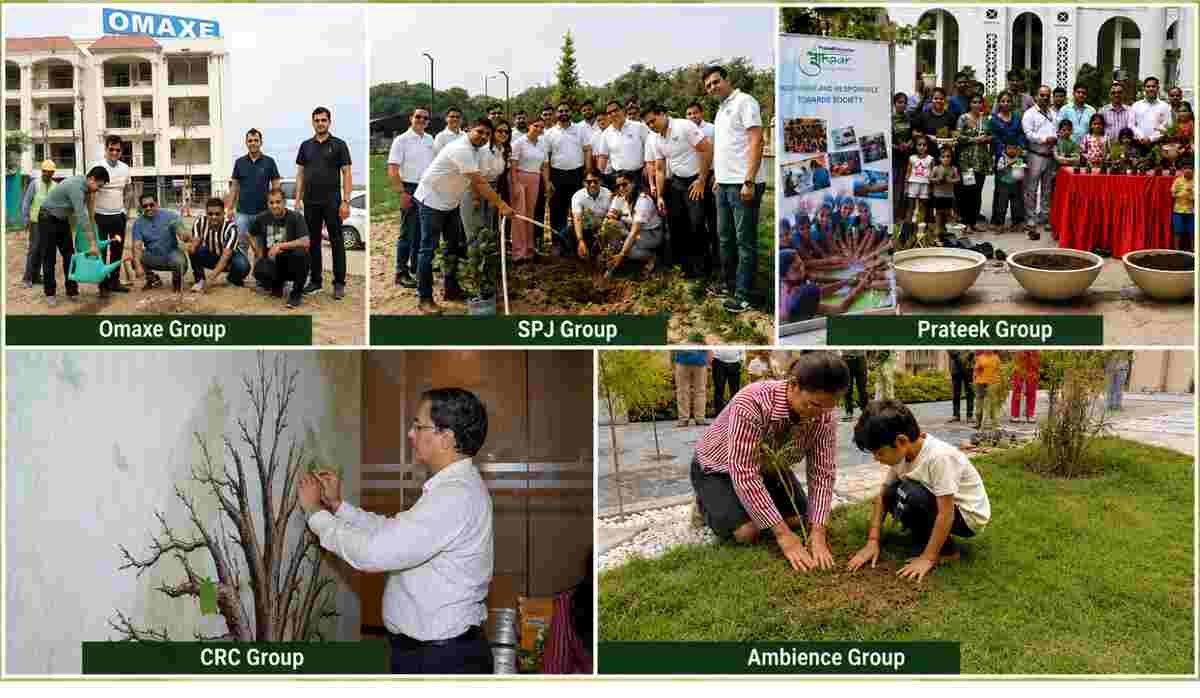
Omaxe Metro City in Lucknow has set an ambitious environmental target for the 690-acre integrated township, committing to plant 10,000 trees and saplings. The developer's approach underscores a fundamental reorientation within the industry—one that prioritises ecological resilience alongside infrastructure development. A distinctive aspect of this commitment involves dedicated resources for maintaining and nurturing the planted saplings over time, acknowledging that genuine sustainability transcends the planting event itself.
Mohit Goel, Managing Director of Omaxe Group, articulated this perspective: "At Omaxe, we believe that building townships is not only about creating physical infrastructure, but also about nurturing environments where communities can truly thrive. This plantation drive reflects our larger vision of responsible and future-ready urban development. As cities continue to expand, preserving ecological balance becomes equally important."
Collective Action at Ambience Creacions
Ambience Creacions in Gurugram leveraged World Environment Day to unite residents and workforce through a coordinated plantation initiative aimed at strengthening biodiversity and expanding green coverage. The collaborative framework served dual purposes: enhancing the physical environment while cultivating environmental consciousness and stakeholder accountability across the community.
Arjun Gehlot, Director at Ambience Group, emphasised this integrated approach: "Sustainability and responsible development have always been at the core of our philosophy. As part of our CSR commitment, we believe it is important to actively contribute towards environmental conservation and engage our community in meaningful initiatives. The plantation drive on World Environment Day is a small yet significant step towards creating a healthier and greener ecosystem for future generations."
Behaviour-Centred Sustainability at CRC Group
CRC Group expanded its environmental engagement at CRC The Flagship in Noida by prioritising attitudinal transformation rather than confining activities to tree-planting alone. The developer organised seed ball-making workshops, encouraged sustainability pledges, facilitated recycling initiatives, and conducted energy conservation awareness sessions targeting both employees and tenants.
This strategy reflects an industry-wide recognition that lasting environmental progress hinges on individual and collective behavioural shifts. By positioning communities as active participants in sustainability rather than passive recipients, developers are constructing the foundation for enduring ecological responsibility.
Satish Garg, Founder and Managing Director of CRC Group, stated: "Sustainability is not merely a responsibility; it is a shared commitment that requires collective action. At CRC Group, we believe that meaningful change begins with small, conscious steps taken consistently by individuals and communities. Through initiatives such as these, we aim to foster greater awareness and encourage environmentally responsible practices that contribute towards a healthier and more sustainable future for generations to come."
Bringing Sustainability Into Homes
Prateek Group deployed a distinctive strategy through its Prateek Foundation's Aakar initiative, organising a workshop called 'Harit Ghar' at Prateek Grand City that equipped residents with practical skills for establishing personal gardens. Participants received instruction on vertical gardening techniques, soil management, and appropriate plant species, alongside starter kits to begin their own balcony gardens.
This approach democratises environmental action by making it accessible and actionable within residential spaces, shifting the locus of sustainability from occasional community events to everyday household practices. The initiative demonstrates how developers can empower residents to integrate ecological consciousness into their daily routines.
Prateek Tiwari, Managing Director of Prateek Group, explained the rationale: "World Environment Day is a reminder that the responsibility for a healthier planet begins close to home, sometimes as close as a balcony. Harit Ghar was our way of making that idea real and actionable for our residents. We wanted families and children to leave not just with awareness, but with something living in their hands."
Organisational Culture and Environmental Stewardship
SPJ Group underscored the role of employees in advancing sustainability by conducting a plantation drive at Atul Kataria Chowk in Gurugram, with participation spanning multiple departmental levels and senior management. This approach demonstrates how environmental initiatives are becoming embedded within corporate culture, signalling organisational commitment to sustainability across all hierarchical layers.
Mitul Jain, Managing Director of SPJ Group, articulated this philosophy: "Sustainability is deeply embedded in our organizational philosophy and guides the way we approach growth and community engagement. Initiatives such as this plantation drive reflect our commitment to creating a positive environmental impact while encouraging collective responsibility. We believe that every community and environment we become a part of should benefit from our presence and efforts."
Reconceptualising Sustainability as Foundational Principle
Nimbus Group has advocated for a fundamental reconceptualisation of environmental responsibility, positioning it as an intrinsic component of urban design and planning rather than a supplementary element. The developer contends that authentic sustainability must shape the foundational decisions that determine how communities are conceived and constructed.
Yamini Agarwal, Director of Marketing and Communications at Nimbus Group, articulated this perspective: "World Environment Day often arrives with familiar conversations about planting trees, reducing waste and protecting natural resources. But the larger question is whether sustainability exists only as an annual reminder or as a principle that shapes our everyday decisions. The future of our cities will be determined by the choices we make long before a building is completed. Sustainability cannot be treated as a feature that is added at the end of a project. It needs to be the very foundation of it."
Systemic Transformation Underway
As climate resilience and accountable urbanisation assume greater prominence, the real estate sector is acknowledging that environmental stewardship cannot remain compartmentalised within design specifications. Developers are adopting multifaceted approaches encompassing major afforestation targets, structured environmental education, hands-on community workshops, workforce engagement schemes, and sustainability-centred planning frameworks.
The overarching message resonating across the sector is unambiguous: environmental responsibility has transitioned from a periodic activity into a continuous, foundational commitment that influences how communities are planned, administered, and inhabited. Through mechanisms that encourage resident participation, foster attitudinal change, and promote sustained environmental thinking, India's real estate industry is progressively constructing ecosystems that serve both current inhabitants and future populations.
Compare options