Hyderabad Lecturer Defrauded of Rs 3 Lakh in Fake Credit Card Scheme
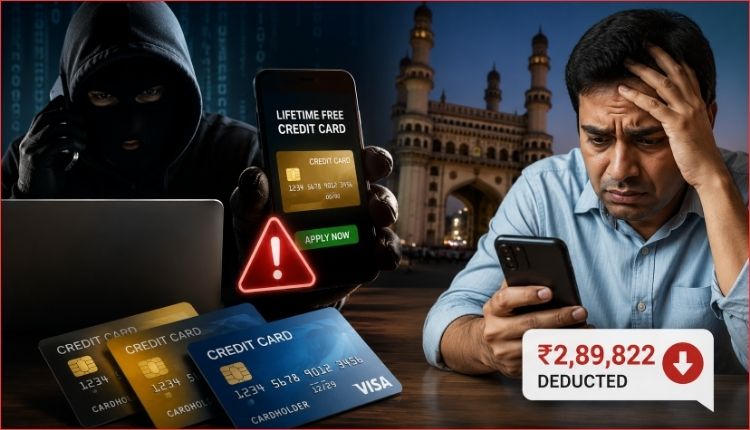
Hyderabad police are investigating a major cyber fraud case in which an engineering college lecturer was cheated out of approximately Rs 3 lakh through an elaborate scheme promising a lifetime free credit card.
The incident began when the victim received a call from someone claiming to represent Punjab National Bank. The caller dangled the attractive offer of a complimentary lifetime credit card, which the lecturer initially accepted.
The fraudster subsequently sent a link via message and requested personal information. Once the lecturer clicked the link, he was transferred to a video call with the scammer. During this conversation, the perpetrator pressured him to display his PAN card and details of his existing credit cards. The victim complied and revealed information about three credit cards.
The next step in the deception involved the caller claiming that the bank was ready to issue the promised card. The lecturer was instructed to download a Punjab National Bank application that was shared through WhatsApp.
Moments after installing the application, the victim's phone began receiving multiple one-time passwords. This triggered his suspicion, and he immediately ended the video call. Unfortunately, the damage had already been done—Rs 1,89,822 had been siphoned from his Bank of Baroda credit card without authorization.
The lecturer promptly contacted the Bank of Baroda customer support line to report the unauthorized transactions. Despite reaching out, he did not receive timely assistance.
The fraudsters moved swiftly to exploit the situation further. Within minutes, they had also drained funds from his two remaining credit cards. By the time the lecturer could take protective measures, his total losses had mounted to nearly Rs 3 lakh.
Police officials have begun their investigation into the sophisticated modus operandi employed by the cyber criminals. Authorities have cautioned the public against divulging sensitive financial details during unsolicited phone calls or video conversations.
Cybersecurity specialists have issued guidance recommending that individuals avoid clicking links from unverified sources or installing applications sent through messaging platforms by unknown parties.
Compare options