Reimagining India's Fiscal Federalism: Lessons from Global Models for Greater State Autonomy
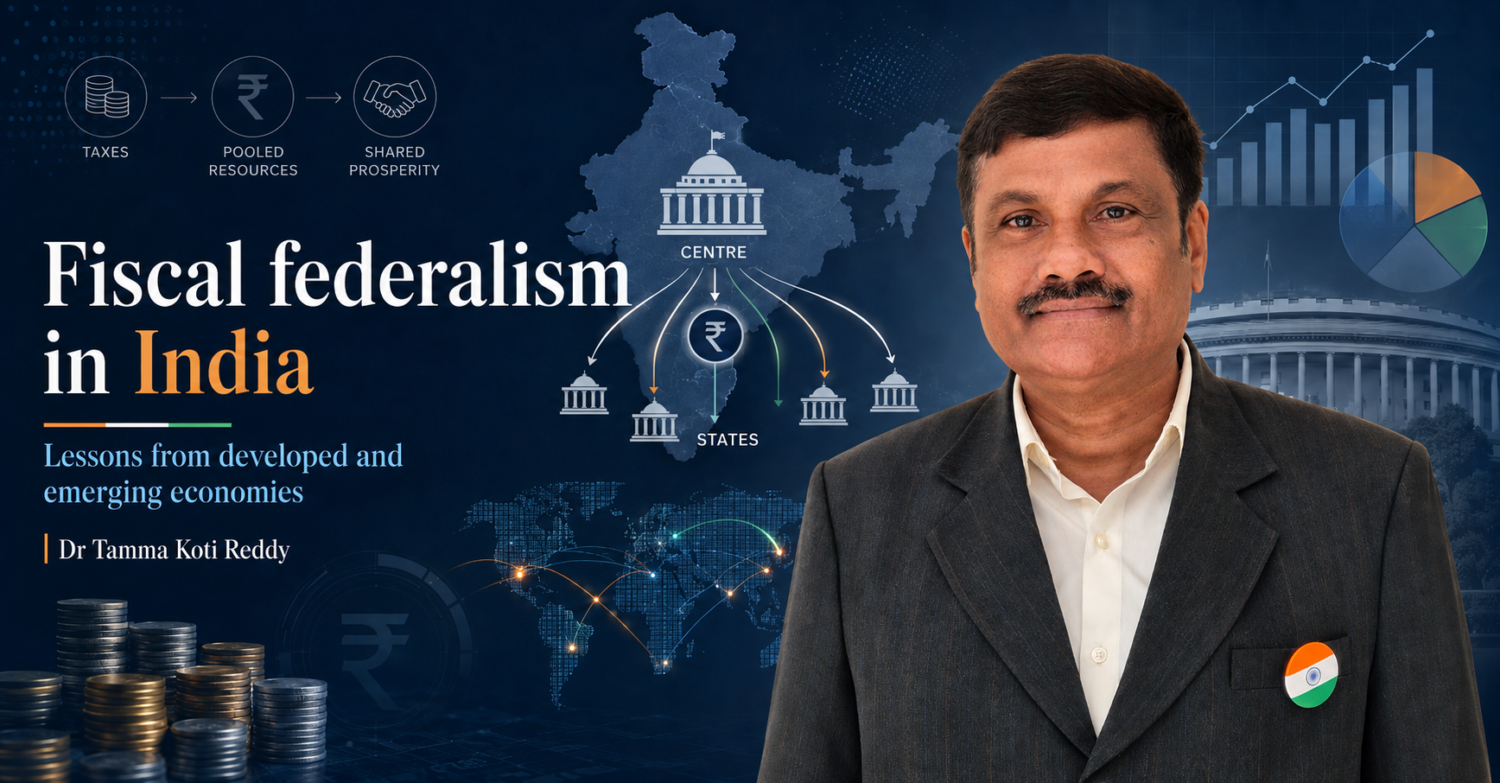
The architecture of fiscal federalism—how governments distribute tax revenues and spending responsibilities across different administrative levels—varies significantly across the world. These differences stem from distinct constitutional frameworks, economic development trajectories, tax structures, and political histories. In India, the distribution of legislative and fiscal powers between the Union, State, and Concurrent lists has created a system where the central government controls the most lucrative tax sources, while states bear substantial expenditure obligations in agriculture, rural development, health, education, and public services. This mismatch has resulted in states becoming heavily reliant on central government transfers.
The Finance Commission serves as India's structured mechanism for recommending tax-sharing arrangements between the Union and states, allocating grants-in-aid, distributing resources across states, and suggesting measures to strengthen local body finances.
Compared with developed and emerging economies such as the USA, Canada, Germany, Australia, and Brazil, India's fiscal architecture remains notably centralized. As states have increasingly become drivers of economic growth in the post-reform period, the need for a more robust fiscal federal framework has become apparent.
How Developed Nations Distribute Fiscal Power
In the USA, Canada, and Germany, sub-national governments enjoy considerably greater tax autonomy than their Indian counterparts. American states and provinces can mobilize a much larger share of their own revenues. The federal system in the USA operates with the central government collecting income, corporate, and import taxes, which are then redistributed to states through grants. These grants take two forms: categorical grants designated for specific purposes and block grants that impose minimal restrictions, enabling states greater discretion in spending priorities. Local governments in the USA derive income from local sales taxes, local income taxes in certain states, and property taxes.
Canada has developed one of the world's most sophisticated frameworks for intergovernmental fiscal coordination. The federal government collects personal income tax, corporate income tax, goods and services tax, excise duties, and customs duties, then transfers funds to provinces through the Equalization program, the Canada Health Program, and the Canada Social Transfer. Provincial governments independently levy their own income and sales taxes and collect resource royalties, while municipalities depend primarily on property taxes supplemented by federal transfers.
Germany represents a model of strong fiscal equalization and integrated cooperation. The country relies substantially on shared taxes, with revenues from personal income tax, corporate tax, and value-added tax distributed among federal, state, and local governments. Though states possess limited independent taxation powers, the system emphasizes cooperative decision-making and ensures financially robust local governments.
Fiscal Federalism Among Emerging Economies
The quasi-federal systems of Brazil and South Africa demonstrate different approaches to fiscal decentralization. Brazil grants states and municipalities considerable tax autonomy and flexibility in managing expenditures and local priorities. South Africa, structured as a unitary state with decentralized fiscal governance under its 1996 Constitution, concentrates revenue collection at the national level through personal income tax, corporate tax, value-added tax, excise duties, and customs duties. Provinces have minimal revenue-raising capacity, while municipalities collect service charges, local levies, and property taxes.
The South African national government redistributes revenue through the Division of Revenue Act according to constitutional principles. Transfers take the form of equitable shares based on formulas without conditions, conditional transfers for specific national priorities, and grants for infrastructure and special purposes. Significantly, while revenue collection is centralized, South Africa has decentralized spending responsibilities and employs a cooperative governance mechanism to coordinate budgets and policies across all government levels.
Pathways to Strengthen India's System
India's fiscal federal structure exhibits strain from vertical fiscal imbalances, mounting national debt, and overlapping responsibilities. Addressing these challenges requires reforms focused on cooperative federalism and improved developmental outcomes.
To achieve objectives including efficient resource allocation, fiscal equity, state autonomy, fiscal discipline, macroeconomic stability, and administrative transparency, India must undertake several measures. Correcting the vertical fiscal imbalance between the Union and states stands as a priority. Rationalizing goods and services tax rules and granting states greater autonomy over fuel and property taxation would strengthen revenue sources at the state level. Building state governments' own tax revenue capacity is essential for accountability and operational efficiency.
India could benefit from adopting formula-based transfer mechanisms similar to Canada's approach, which would reduce political discretion in fund allocation. Clarifying center-state scheme responsibilities, fully implementing the 73rd and 74th constitutional amendments concerning local government empowerment, introducing countercyclical borrowing frameworks, enhancing transparency in off-budget borrowing, modernizing tax compliance systems through technology, and transitioning from line-item to performance-based budgeting would all contribute to a more transparent federal structure. Strengthening independent fiscal councils and improving the ease of doing business at the state level would further support these objectives.
For equalization principles to function effectively, they should guarantee comparable socio-economic standards across regions. Central transfers to states and local governments should prioritize service delivery while establishing minimum benchmarks in education, health, and basic infrastructure. Reducing ad hoc ministerial transfers made on political considerations would strengthen the system's integrity.
India can draw particular inspiration from Germany's approach to cooperative institutions and fiscal predictability, and from South Africa's emphasis on local government empowerment, equitable public service access across regions, and outcome-focused budgeting. Treating states as genuine partners in India's federal structure—rather than subordinate entities—would unlock greater inclusive growth potential and enable the nation to address regional disparities more effectively.
Compare options