Russian Artist Julia Usmanova Charts Her Journey of Finding Home in India
A solo exhibition by Russian painter Julia Usmanova offers viewers an intimate window into how a foreign land gradually becomes home. Titled "When India Became Home" and curated by Neena Gulati, the show runs at the Main Gallery in Bikaner House, New Delhi, through June 23.
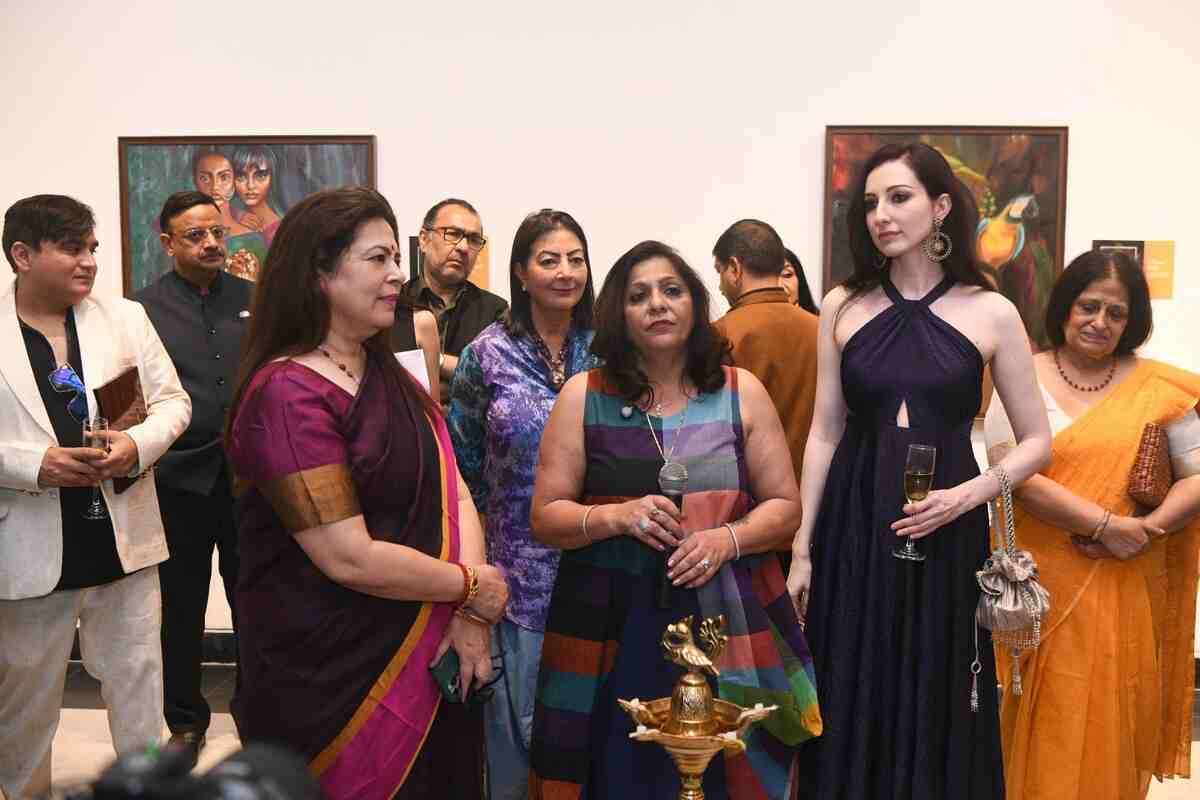
The exhibition's opening brought together prominent figures in Indian cultural and political life. Former Chief Election Commissioner Dr. S. Y. Quraishi, art critic and author Uma Nair, and former Union Minister Meenakshi Lekhi inaugurated the display, underscoring its significance in the contemporary art landscape.
Usmanova trained at the St. Petersburg Art Academy, one of Russia's most esteemed institutions. Her practice centres on figurative painting that probes questions of femininity, sensuality, connection to nature, and human relationships. By marrying the technical rigour of Russian academic realism with dreamlike, poetic sensibilities, she constructs visual narratives that transcend geographical boundaries.
The artist's relationship with India began in 2017, when she first visited the subcontinent. What started as a journey became a recurring pattern—Usmanova returned repeatedly, each visit deepening her attachment to the country. The sensory and emotional dimensions of India permeate her recent work: the quality of monsoon light, the warm tones of turmeric and mango, the fragrance of jasmine, the aesthetic richness of traditional dress, and the texture of ordinary lived moments all appear woven into her artistic vocabulary.
A distinctive female figure threads through the exhibition, functioning simultaneously as observer and participant in the narratives Usmanova constructs. This recurring presence embodies nature, emotion, personal experience, and the artist's own process of self-discovery and belonging.
The exhibition ultimately testifies to how cultural exchange reshapes identity. Through Usmanova's brushwork, India emerges not merely as a subject of artistic interest but as a transformative force that has fundamentally altered how she sees herself and her place in the world.
Compare options