BRS Leader Alleges Systemic Corruption in Telangana Education Department Procurement
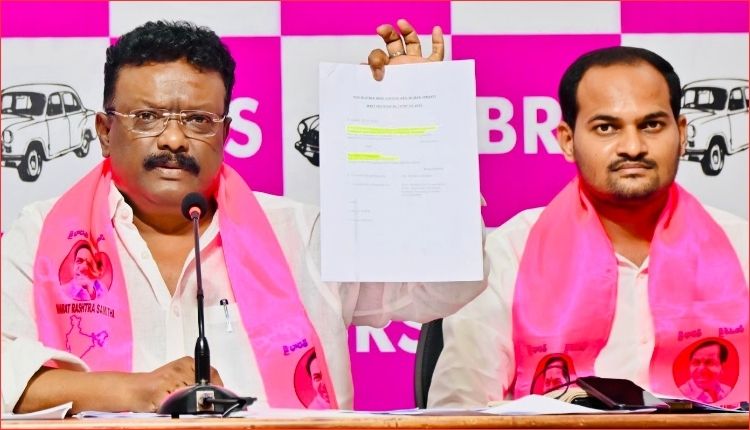
Hyderabad: The Telangana education procurement system has been transformed into a vehicle for corruption through centralized control, alleged BRS MLC Dr. Dasoju Sravan Kumar in a media address.
The legislator contrasted the previous decentralized tendering approach with the current system now in place. Under the earlier model, residential welfare institutions and district collectors independently issued tenders aligned with local requirements. This structure enabled small enterprises—including Padmashali weaving families, tailors, MSMEs and local manufacturers—to supply goods and services while generating employment opportunities within their communities.
The Congress government, following Chief Minister A. Revanth Reddy's assumption of office, dismantled this framework and instituted centralized procurement, Dr. Sravan Kumar stated. He pointed out that stakeholders and opposition parties were not consulted during this transition.
Structural Changes Raise Concerns
The new arrangement operates through a Project Monitoring Unit established under GO Ms No.17/202, which functions under the SC Welfare Residential Schools Secretary, according to the BRS leader. He flagged the appointment of non-IAS officer Sharada to a significant position within the PMU, alongside the replacement of established officers including Nicholas, R.S. Praveen Kumar and Ronald Rose with non-cadre personnel—individuals less likely to challenge procedural violations.
Dr. Sravan Kumar characterized the framework as a "centralized corruption model" designed to channel contracts valued at thousands of crores through the Chief Minister's Office.
Eligibility Criteria Exclude Small Suppliers
The procurement norms heavily favor large corporations, according to the BRS MLC. Suppliers bidding for uniform materials must demonstrate a turnover of Rs 250 crore, while notebook suppliers require Rs 150 crore in annual turnover. Additionally, participants face solvency certificate requirements ranging from Rs 2 crore to Rs 4 crore.
These stipulations effectively bar small Padmashali families, MSMEs and local manufacturers from participating, Dr. Sravan Kumar argued. He further criticized the absence of advance design specifications for items including trolley bags, PT dresses and blankets, and the failure to establish base prices for tenders—enabling companies to propose inflated rates unchecked.
Constitutional and Legal Violations Alleged
The government issued GO Ms No.1 in 2024 mandating that departments procure cloth-related items through the Telangana State Handloom Weavers Cooperative Society Limited, aimed at safeguarding approximately 40,000 handloom weaving families across the state. Dr. Sravan Kumar alleged that despite this directive, the government proceeded with centralized procurement via the PMU.
A High Court judgment in a case involving a handloom cooperative from Warangal proved instructive, Dr. Sravan Kumar noted. Justice Anil Kumar Jukanti recognized that cooperative societies enjoy constitutional safeguards under Article 43B and directed the government to channel purchases through TESCO (Telangana State Handloom Weavers Cooperative Society Limited). The government, however, maintained centralized procurement while claiming TESCO lacked sufficient supply capacity, he alleged.
Demands for Action
Dr. Sravan Kumar questioned the basis for awarding Rs 1,200 crore in contracts to entities that should have been disqualified from bidding. He called for immediate tender cancellation and a thorough investigation into the procurement mechanics.
Should the government fail to respond, the BRS will escalate the matter to the State Vigilance Commission, Central Vigilance Commission and courts, Dr. Sravan Kumar warned.
Compare options