Bobby Deol Opens Up About His Father Dharmendra, Explains Shift to Negative Roles on Aap Ki Adalat
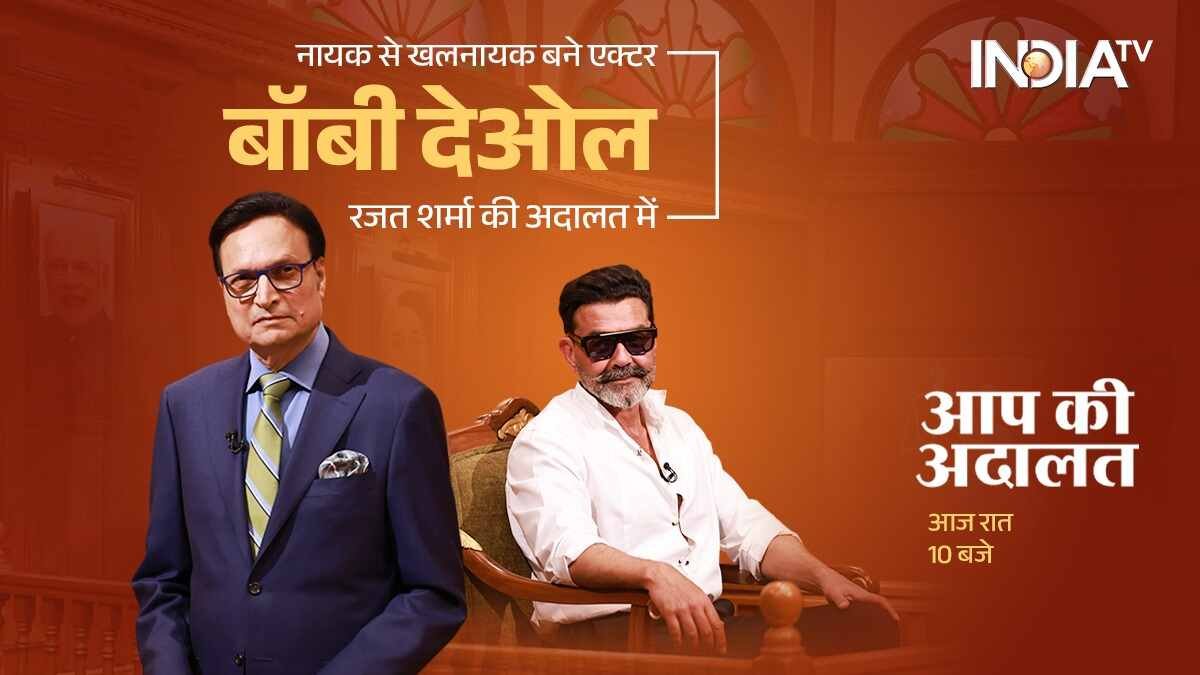
Actor Bobby Deol found himself overcome with emotion during an appearance on Rajat Sharma's long-running television programme Aap Ki Adalat, particularly when the conversation turned to his father Dharmendra, who passed away the previous year.
With tears in his eyes, Bobby Deol expressed his sentiments about his father, stating that no one could ever match his stature or character. He recalled how his brother Sunny Deol would accompany their father whenever he visited the show, describing the moment as deeply meaningful to him.
"I was blessed to be born into a family where I had both my mother and father," Bobby Deol reflected. "There simply cannot be anyone like him."
When Rajat Sharma probed whether Bobby had inherited his father's volatile temperament and tendency toward physical confrontation, the actor provided insight into their differing natures. He explained that while his father was a man of considerable physical strength who would react sharply to verbal provocation—occasionally striking those who insulted him—he would subsequently invite them home, offering them food, milk, and new clothes.
"Since childhood, I never felt the need to raise my hand against anyone," Bobby Deol clarified. "It's not something I'm comfortable with, and it's not something I've ever done."
The discussion then shifted to Bobby Deol's professional choices, specifically his decision to pursue negative and antagonistic roles—a significant departure from the career trajectories of both his father and his brother Sunny Deol, neither of whom ventured into villain roles.
Bobby Deol attributed his career pivot to the emergence of digital platforms and the creative opportunities they presented. He explained that while heroes remain heroes, he became drawn to complex characters that leave a lasting impression on audiences long after the film concludes.
When Rajat Sharma questioned his portrayal of a corrupt, immoral religious figure in a particular production, Bobby Deol clarified that the role selection was not premeditated. He recounted how director Prakash Jha had approached him with a script, initially leading him to believe he would be cast as a police officer. Instead, Jha offered him the role of a religious charlatan—a part that challenged him to step outside his comfort zone.
The character Bobby Deol took on generated controversy, with audiences and critics drawing comparisons to real-life religious figures involved in scandals. The project's title was modified following public outcry regarding allegations of defamation toward spiritual leaders and ashrams.
Bobby Deol maintained that the character was not modeled after any specific religious figure but rather reflected societal patterns that cinema naturally mirrors. He emphasized that while some spiritual leaders are genuine, others exploit their positions—a reality his film sought to portray.
When asked what inspired the specific portrayal, Bobby Deol distanced himself from contemporary media consumption, noting that he deliberately avoids such sources of information. He stressed that society is undergoing transformation, with human values becoming increasingly superficial and materialistic. Director Jha had specifically instructed him not to reference any real-world religious leaders while developing the character.
Addressing whether he had consulted his father or brother about taking on such a role, Bobby Deol acknowledged that both had traditionally avoided negative characters throughout their careers. However, he felt compelled to forge his own professional path rather than simply replicate what had worked for his family members, particularly since their approach was not yielding results for his own career trajectory.
Compare options