Bitcoin Plummets Below $60,000 Mark, Marking Lowest Point Since October 2024
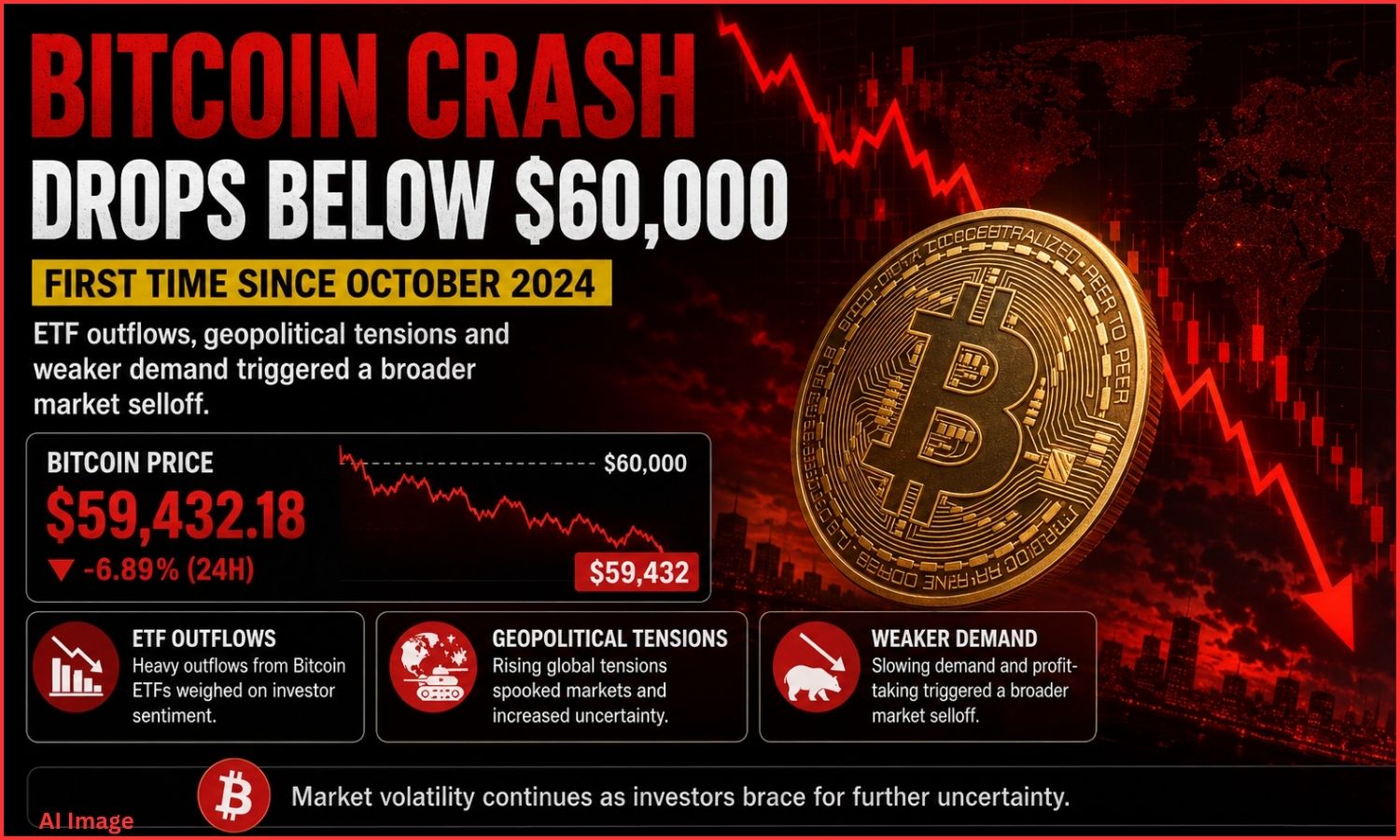
The world's leading cryptocurrency experienced a significant selloff on Friday, dipping below the $60,000 threshold—a level not seen since October 2024. The digital asset fell as low as $59,770 during the day's trading, marking a steep 6 per cent decline and extending a prolonged downtrend that has wiped out more than half of Bitcoin's gains from its record high.
Bitcoin reached a peak exceeding $126,000 in October 2025, but has since retreated substantially. The current price level sits below where the asset was trading when the Trump administration took office.
Market analysts point to multiple factors driving the recent weakness. Outflows from Bitcoin-linked exchange-traded funds have intensified selling pressure, while geopolitical instability and doubts about future demand have compounded concerns. Attention has also focused on Strategy Inc., a prominent corporate holder of Bitcoin, which executed a notable sale of its holdings earlier this week. This move has sparked renewed debate about the sustainability of the corporate treasury strategy that fueled the cryptocurrency's previous rally.
The crypto sector faces headwinds from evolving investor preferences. Speculative investors have increasingly redirected capital toward artificial intelligence-related equities, which have become central to growth-oriented portfolios. Simultaneously, money has flowed into options trading, prediction markets, and other alternative digital products, diverting attention from traditional cryptocurrency holdings.
The broader digital asset ecosystem has suffered corresponding losses. Ether experienced a sharper decline of 12.8 per cent, reaching its lowest level since April 2025. Other major cryptocurrencies including XRP, Solana, and Dogecoin each saw declines exceeding 5 per cent.
Despite backing from the Trump administration and increasing institutional participation, the cryptocurrency market has struggled to generate sustained buying interest. Persistent inflation pressures and expectations of elevated interest rates have weighed on non-yielding assets like Bitcoin, limiting their appeal to investors seeking yield-generating opportunities.
Compare options


