Azim Premji University Releases Comprehensive Handbook Examining India's Welfare Architecture
New Delhi — India operates one of the world's most expansive welfare ecosystems, extending coverage to substantial segments of its population through initiatives addressing food security, health, education, nutrition, employment, and social protection. During the COVID-19 crisis, welfare programmes including the Public Distribution System, MGNREGA, and social security transfers proved instrumental in safeguarding economically vulnerable sections of society.
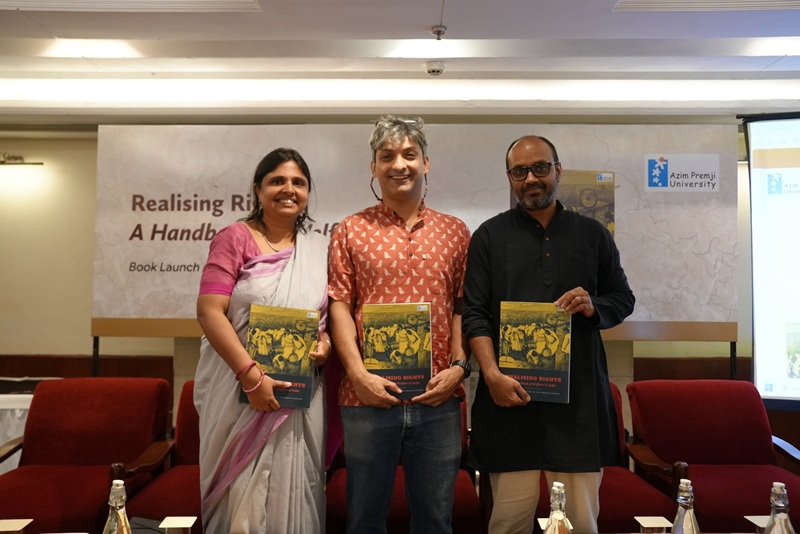
Azim Premji University has unveiled Realising Rights: A Handbook of Welfare in India, a comprehensive examination of the strengths, limitations, and trajectory of India's welfare framework. Produced by the Centre for the Study of the Indian Economy, the publication assembles contributions from 27 scholars across 18 chapters, presenting a rights-centred evaluation of the country's social policies and institutional structures.
Fiscal Allocations and Coverage Expansion
The Handbook highlights several critical findings about India's welfare spending and reach:
State administrations contribute approximately 90% of total social sector expenditure, with the central government's contribution shrinking from 23.6% in 2008-09 to 8.5% in 2024-25. Combined government spending on welfare sectors and schemes examined in the volume reaches about 7% of GDP and 21% of total public expenditure.
Education receives around 4% of GDP in public funding while health spending remains below 2% of GDP, falling short of established policy benchmarks. However, rights-based policy interventions have dramatically broadened welfare access:
Anganwadi centres expanded from 6 lakh to 14 lakh following Supreme Court directives. The National Food Security Act enlarged subsidised foodgrain distribution from 36.3 crore to over 81 crore beneficiaries. MGNREGA has annually generated 200–300 crore person-days of employment, with women constituting over 55% of those employed through the scheme.
Emerging Challenges and Persistent Gaps
The rapid proliferation of cash transfer schemes is transforming how welfare reaches citizens, though increasing digital integration introduces concerns regarding exclusion and administrative oversight. Multiple key programmes continue to experience shortfalls in beneficiary coverage, resource allocation, and ground-level execution, particularly in maternity assistance, nutrition interventions, pension schemes, and medical services.
Indu Prasad, President of Azim Premji University, stated: "India's Constitution embodies a commitment to dignity, opportunity, and justice for every citizen. We hope this Handbook contributes to informed public dialogue and strengthens collective efforts to build a more equitable and inclusive India, advancing the aspiration of a Viksit Bharat that leaves no one behind."
Dipa Sinha from the Centre for the Study of the Indian Economy remarked: "The Handbook provides a comprehensive view of India's welfare landscape through an analysis of major rights-based interventions of the Union government. We hope it serves as a valuable resource for academics, journalists, practitioners, and students, while helping translate research into action."
The publication synthesises evidence across multiple sectors to advance substantive discussions on welfare policy, institutional governance, and social equity, emphasising the imperative to fortify universal and transparent public service delivery systems.
Compare options