Coal-to-Chemicals and Hydrogen Take Centre Stage in India's Energy Transition Dialogue
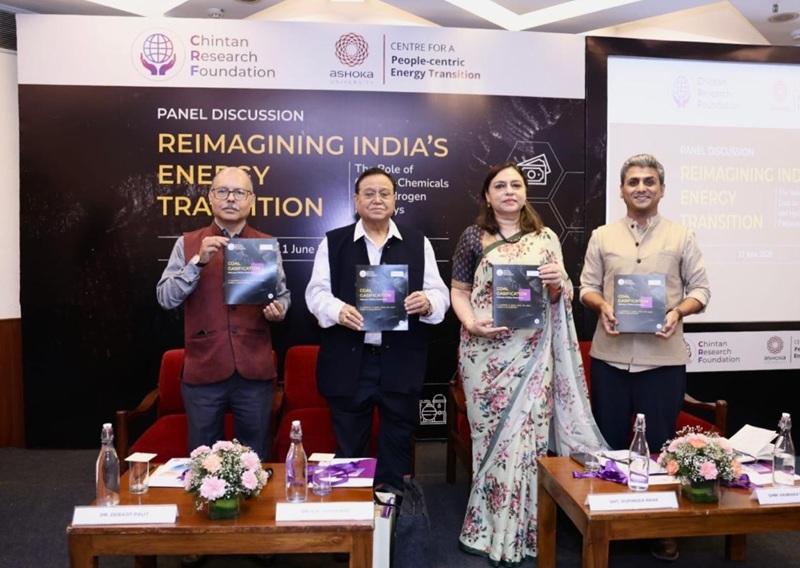
New Delhi hosted a significant discussion on India's energy future as the Ashoka Centre for a People-centric Energy Transition (ACPET) and Chintan Research Foundation brought together government officials, industry figures, researchers and policy experts to examine coal's evolving role in the country's energy landscape.
The gathering at India Habitat Centre focused on transforming coal from a conventional power-generation fuel into a value-generating feedstock for chemicals, hydrogen and other industrial uses. Participants explored how this strategic repositioning could support India's long-term energy transition while maintaining energy security and spurring industrial growth.
Balancing multiple priorities emerged as a central theme. As renewable energy capacity expands, coal remains deeply embedded in India's energy system and industrial economy. The dialogue examined how emerging technologies—including coal gasification, carbon capture, utilisation and storage (CCUS), and coal-to-chemicals conversion—could create new value chains while enabling a diversified transition strategy that accounts for India's development needs and resource constraints.
Former NITI Aayog member Dr V.K. Saraswat opened proceedings by emphasizing energy security amid geopolitical uncertainties and rising dependence on energy imports. He stressed that while coal will remain significant in India's energy mix for decades, the country must move beyond traditional power generation applications and adopt clean coal technologies.
"Coal gasification is the answer. Coal must be transformed into hydrogen, methanol, ammonia and other value-added products through clean coal technologies so that it can support both energy security and industrial development," Dr Saraswat said, highlighting how this approach could insulate India from geopolitical tensions while supporting net-zero objectives.
The Ministry of Coal's Additional Secretary, Smt. Rupinder Brar, underscored coal's strategic importance as one of India's most abundant domestic resources. She called for accelerating coal gasification adoption and strengthening collaboration among government, industry, academia and research institutions to develop technologies suited to Indian conditions.
"Somewhere we keep missing the need to focus on research. We need to put more heads together, we need to research more, and we need to spend more on innovation," Smt. Brar said, stressing that collaborative partnerships would be essential to realizing coal gasification's full potential while ensuring environmental sustainability and community welfare.
Two substantive panel discussions explored the technical pathways. The first examined coal gasification's potential to produce syngas, while the second focused on converting syngas into hydrogen, chemicals and other high-value products. Participants highlighted how such conversions could reduce reliance on imported fuels and feedstocks, strengthen India's position in fertiliser and chemical sectors, and unlock new value from the country's coal reserves.
The dialogue examined hydrogen's emerging role in India's energy future, with experts emphasizing that achieving energy transition and net-zero targets would require a diversified technology portfolio reflecting India's development priorities and resource realities. Advancing indigenous research, developing context-appropriate technologies, and fostering government-industry-academia collaboration were identified as crucial to ensuring solutions are economically viable, scalable and aligned with energy security and industrial competitiveness goals.
Technical perspectives came from Shri A.K. Jha, Former Chairman and Managing Director of Coal India Limited, and Dr A.K. Balyan, Director General of the Coal Gasifiers Association of India, who addressed technology readiness, feedstock availability, infrastructure needs, investment requirements and policy frameworks necessary for scaling coal gasification commercially.
Vaibhav Chowdhary, Director of ACPET, emphasized that India's energy transition must encompass energy security, industrial competitiveness, sustainability and community well-being. "As the country charts its pathway towards a low-carbon future, it is important to explore solutions that leverage domestic resources while supporting economic growth and technological innovation," he noted.
The dialogue reflects ACPET's commitment to advancing interdisciplinary research and evidence-based policy discussions on India's energy transition. By convening government, industry, academia and civil society, the centre aims to develop practical, people-centric solutions that strengthen both sustainability and economic development outcomes.
Compare options