Human Capital Emerges as Banking's True Competitive Edge Amid AI Transformation
Mumbai — As artificial intelligence reshapes the financial services landscape, a former chief of India's largest bank has challenged conventional wisdom about what drives success in the sector.
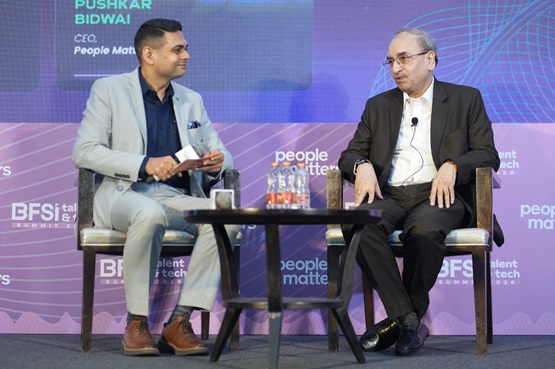
Dinesh Khara, now Board Chairman of PeopleStrong and previously Chairman of State Bank of India, asserts that talent and human capability have become more valuable than capital itself in banking. Speaking at the People Matters BFSI Talent & Tech Summit 2026 on 4 June, he outlined how institutions must reimagine their approach to workforce development, technology integration, and organisational culture.
The summit, held in Mumbai and attended by over 210 senior HR and business leaders from across India's banking, financial services, and insurance sector, centred on the theme "Capability is the new Currency."
Khara wove together multiple dimensions of organisational transformation: skills architecture, governance frameworks for AI deployment, succession planning, and the evolution of employee value propositions. His remarks underscored a fundamental shift in how the financial sector must view its most essential asset.
The Human Element in an Automated World
While AI continues to penetrate risk management, operations, and customer-facing functions, Khara cautioned against over-reliance on automation in a heavily regulated industry. The critical gap, he argued, lies in risk management—a domain where human judgment and contextual understanding remain irreplaceable.
"There has to be an equilibrium between AI and human expertise," he stated, emphasising that financial professionals must interpret nuanced, dynamic risks rather than defer entirely to algorithmic decisions.
The challenge for HR departments has evolved beyond recruitment and training. The focus must now shift to creating environments where existing talent remains engaged, develops continuously, and sees pathways for meaningful contribution within the organisation.
Design as Overlooked Competitive Advantage
Khara highlighted an often-neglected capability that will increasingly differentiate financial institutions: design thinking and customer experience architecture. As financial products become commoditised and easier to replicate across competitors, the real advantage lies in how experiences are conceived, executed, and refined.
"Product design is becoming increasingly important because it shapes customer experience while also helping organisations optimise operations and technology investments," he noted.
Culture and Communication as Foundations
Returning to organisational culture, Khara stressed the role of leadership in enabling transformation at scale. Creating an environment where employees perform at their best requires deliberate effort and authentic communication.
"Nobody wants to be associated with poor performance. The real task is creating an enabling environment where people can perform at their best," he said. On the communication front, he added: "If you are honest in your communication, half the job is done."
With India charting its course toward 2047, Khara's parting message positioned human-centric strategy as the differentiator. Institutions that will lead the sector are those treating investment in people with the same seriousness as investment in technology.
"The future belongs to those who are willing to learn, adapt, and contribute in new ways," he concluded.
Compare options