Student body backs Hanumantha Rao's push for national caste census
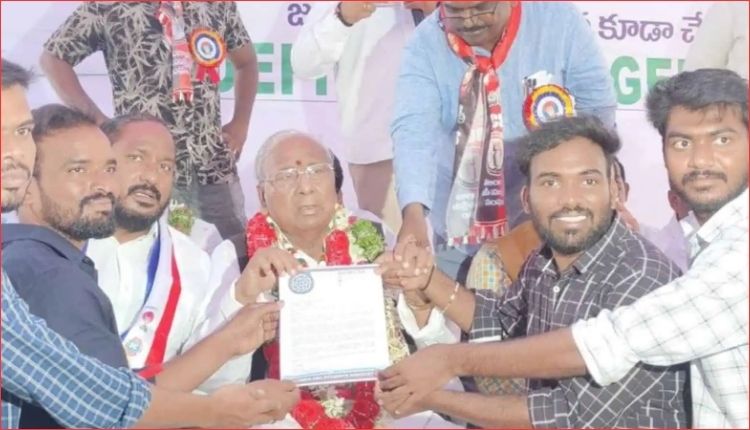
Hyderabad: Student leaders from the All India OBC Students Association (AIOBCSA) have rallied behind a hunger strike led by former MP V. Hanumantha Rao, who is campaigning for a national caste census and enhanced social justice measures for OBC communities.
Hanumantha Rao, an adviser to the Telangana Government on backward class welfare, initiated the protest to advocate for fairer representation and more robust support systems targeting disadvantaged groups nationwide.
In its backing of the initiative, AIOBCSA emphasized its commitment to democratic advocacy for social equity, data-driven policy formulation, and proper enforcement of constitutional protections for marginalised sections.
The student organisation underscored that undertaking a comprehensive caste census would be vital to understanding the genuine socio-economic circumstances faced by OBC communities across India.
A delegation from AIOBCSA met directly with Hanumantha Rao to express solidarity with his cause. The group included National Adviser Alla Ramakrishna, National Secretary and HCU Unit President Lakshminarasaiah, known as Lucky, Telangana Working President Ganesh Goud, and OU Vice President Shiva Yadav. They presented a formal solidarity letter representing the broader student movement.
According to AIOBCSA, collecting reliable demographic and economic information through a caste census would enable policymakers to design targeted interventions grounded in factual evidence. Such data, the organisation contended, would be instrumental in guaranteeing adequate representation for communities facing systemic disadvantage and in strengthening the delivery of welfare programmes.
The student body characterised the movement as a significant democratic effort aimed at advancing social justice and ensuring that government decisions affecting OBC populations are shaped by accurate information rather than assumptions.
Compare options