Adani Foundation's Canteen Renovation Triples Income for Rural Women's Enterprise in Maharashtra
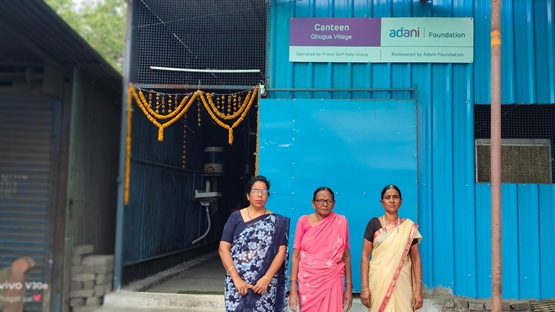
ACC, a cement and building materials company within the Adani group, has partnered with Adani Foundation to advance women-led businesses across rural Maharashtra via corporate social responsibility efforts. The initiative demonstrates how targeted infrastructure improvements can unlock economic potential in underserved communities.
A self-help group (SHG) operating a canteen in Ghughus village faced a familiar constraint: operational limitations rather than lack of market demand. The establishment struggled with cramped quarters, inadequate lighting, poor air circulation, and substandard sanitary facilities. These physical constraints kept daily customer numbers between 30 and 35, capping monthly net income at Rs. 20,000 to Rs. 25,000. Despite the women's dedication and effort, the business structure itself prevented growth.
Recognizing the underlying potential, Adani Foundation determined that structural improvements could unlock the canteen's viability. The renovation was financed through a shared investment model: the SHG contributed half the costs, signalling their commitment to the enterprise's future, while Adani Foundation provided the remaining funds. The comprehensive upgrade included new flooring, enhanced lighting and ventilation systems, reorganized cooking facilities prioritizing hygiene standards, and expanded seating capacity—addressing the most visible operational bottleneck.
Results emerged swiftly and tangibly. Daily customer visits nearly doubled to approximately 60 patrons. Monthly net income reached approximately Rs. 60,000—a threefold increase. For the SHG members, the financial gains accompanied broader personal benefits and strengthened economic security for the women operating the enterprise.
The Ghughus project illustrates a principle central to Adani Foundation's development philosophy: transformative community interventions often involve straightforward solutions rather than complex programs. Sometimes the answer lies in improved cooking infrastructure, better lighting, and adequate seating capacity. These fundamentals can convert a subsistence livelihood into a functioning business and establish a foundation for sustained economic advancement.
Compare options