BRS Leader Criticises Minority Welfare Spending Shortfalls in Telangana
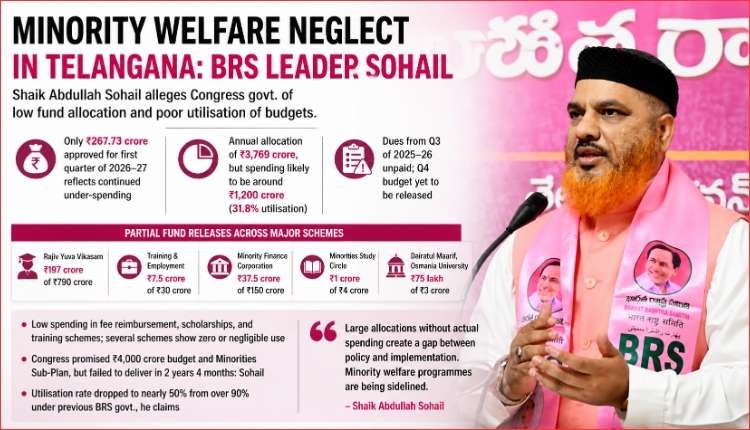
Hyderabad — Shaik Abdullah Sohail, a prominent leader in the Bharatiya Rashtra Samithi, has voiced serious concerns about the state's handling of minority welfare funding, asserting that the Congress administration has fallen short on its financial commitments.
The BRS figure pointed to the allocation of Rs. 267.73 crore for the opening quarter of fiscal 2026–27 as evidence of continued budgetary constraints. He contended that such modest fund releases cast doubt on the government's dedication to advancing minority community interests.
With an annual budget earmarked at Rs. 3,769 crore, Sohail projected that actual spending would remain below Rs. 1,200 crore—representing a utilisation rate of approximately 31.8 percent. He described this performance as significantly inadequate.
Administrative approval for first-quarter disbursements was granted through GO Rt. 58 by the Minority Welfare Department. Yet Sohail noted that outstanding payments from the third quarter of 2025–26 had not materialised, and funds for the fourth quarter remained unallocated. He argued that granting approvals without corresponding cash transfers severely compromised the rollout of welfare initiatives.
Disparities Across Major Programmes
The BRS leader detailed substantial funding gaps across flagship schemes. The Rajiv Yuva Vikasam programme received only Rs. 197 crore against its Rs. 790 crore budget. The Training and Employment Scheme secured just Rs. 7.5 crore of its Rs. 30 crore entitlement, while the Minority Finance Corporation obtained Rs. 37.5 crore from a total provision of Rs. 150 crore.
Educational support allocations similarly fell short of requirements. The Minorities Study Circle was granted Rs. 1 crore against Rs. 4 crore, and Dairatul Maarif at Osmania University received Rs. 75 lakh from a sanctioned Rs. 3 crore. Infrastructure development and institutional grants for the Urdu Academy also faced restrictions, prompting worries about the sustainability of minority educational institutions.
Delayed fund transfers, according to Sohail, created operational difficulties for these bodies. Institutions struggled with unpaid invoices and salary arrears while remaining uncertain about when full allocations would arrive.
Educational Schemes Hit Hard
The situation in education-focused initiatives appeared particularly acute, Sohail indicated. Data from 2025–26 revealed minimal expenditure in fee reimbursement, scholarship distribution, and vocational training programmes. Multiple schemes registered negligible or nil spending, leaving students and youth from minority communities disadvantaged.
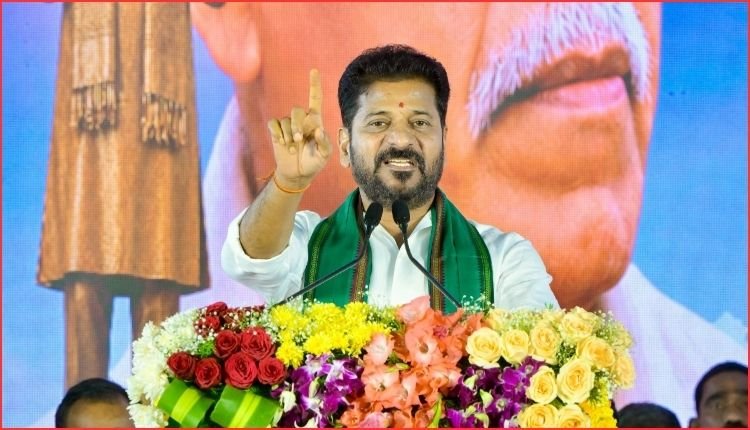
Sohail trained his criticism on Chief Minister A. Revanth Reddy, recalling Congress campaign promises of a Rs. 4,000 crore minorities welfare budget and a dedicated Minorities Sub-Plan to maximise fund utilisation. Having governed for over two years and four months, he asserted, the administration had failed to deliver on these commitments.
He drew comparisons with the preceding BRS administration, claiming that fund utilisation had deteriorated dramatically—dropping to nearly 50 percent from over 90 percent previously. Such a decline, he suggested, reflected misplaced governmental priorities.
Sohail called for immediate action to rectify the situation and ensure accountability in fund distribution. He argued that substantial budget allocations without corresponding expenditure represented a fundamental disconnect between stated policy objectives and actual implementation.
The BRS leader concluded by asserting that minority welfare schemes were being marginalised within the state's development agenda. He urged the government to accelerate fund releases and strengthen scheme execution to serve the minority population effectively.
Compare options